
When businesses and consumers evaluate financial software or data processing services, they frequently encounter the term "bank level security" as a key selling point. This phrase has become ubiquitous in the technology sector, appearing on websites for payment processors, accounting platforms, and document management tools. Understanding what bank level security actually entails is essential for making informed decisions about which services can be trusted with sensitive financial information. The standards that govern financial institutions represent some of the most stringent data protection requirements in any industry, and when third-party services claim to meet these standards, they're making significant promises about how they handle your data.
What Bank Level Security Actually Means
Bank level security refers to a comprehensive set of data protection practices, technologies, and compliance standards that financial institutions must implement to safeguard customer information. These requirements aren't voluntary guidelines but mandatory frameworks established by federal regulations and industry oversight bodies.
The foundation of bank level protection includes several critical components that work together to create multiple layers of defense against unauthorized access and data breaches.
Core Components of Bank Level Protection
Financial institutions operate under strict regulatory oversight that defines minimum security standards. These standards address both physical and digital security measures:
- 256-bit encryption for data transmission and storage
- Multi-factor authentication requiring multiple verification methods
- Continuous monitoring of systems for suspicious activity
- Regular security audits conducted by independent third parties
- Incident response protocols for managing potential breaches
- Employee training programs on security best practices
The Interagency Guidelines for Information Security Standards provide a comprehensive framework that bank holding companies must follow to protect customer information and ensure data confidentiality.
Encryption Standards That Define Bank Level Security
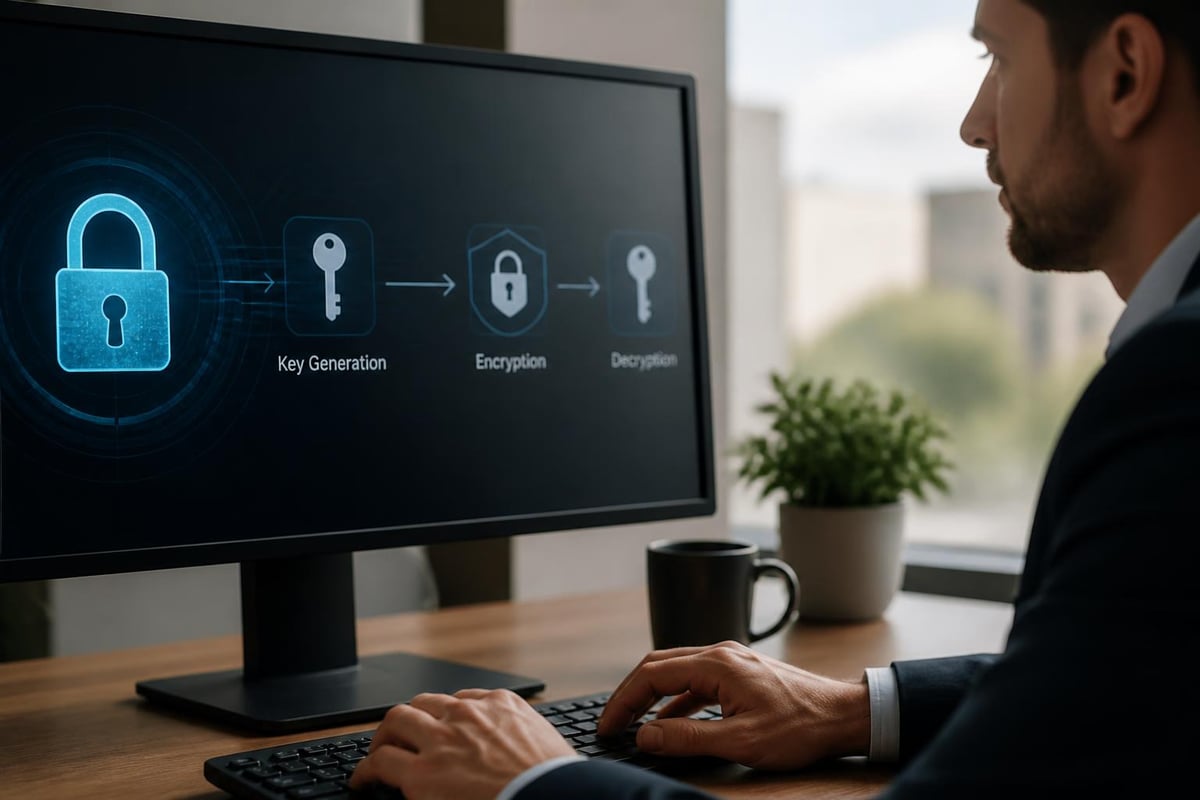
Bank-level encryption utilizes Advanced Encryption Standard (AES) with 256-bit keys, the same encryption method used by government agencies to protect classified information. This encryption standard makes it computationally infeasible for unauthorized parties to decrypt data without the proper keys.
When data transmits between your device and a server, Transport Layer Security (TLS) protocols create an encrypted tunnel that prevents interception. Financial institutions typically require TLS 1.2 or higher, ensuring that even if data packets are captured during transmission, they remain unreadable to attackers.
Regulatory Framework Behind Bank Level Standards
The security measures that define bank level protection aren't arbitrary choices but requirements mandated by federal regulations and enforced through regular examinations and audits.
Federal Compliance Requirements
Financial institutions must comply with multiple regulatory frameworks that establish minimum security standards. The Gramm-Leach-Bliley Act (GLBA) requires financial institutions to explain information-sharing practices and protect sensitive data. This legislation established the foundation for modern financial data security requirements.
The Federal Financial Institutions Examination Council (FFIEC) provides additional guidance through its Information Technology Examination Handbook, which examiners use to evaluate whether banks meet security standards. Banks that fail to meet these standards face regulatory actions, fines, and potential restrictions on their operations.
| Regulation | Primary Focus | Key Requirements |
|---|---|---|
| GLBA | Privacy & data sharing | Safeguards Rule, Privacy Notice |
| FFIEC Guidelines | IT security standards | Authentication, monitoring, testing |
| Federal Reserve Rules | Security programs | Physical security procedures, employee screening |
| SOC 2 Compliance | Service organization controls | Availability, confidentiality, processing integrity |
Third-Party Risk Management
Banks don't operate in isolation. They work with numerous vendors and service providers who access customer data or connect to banking systems. Regulatory guidance requires banks to implement rigorous third-party risk management programs.
Before engaging a service provider, banks must conduct due diligence to verify the vendor's security capabilities. This includes reviewing security certifications, testing security controls, and establishing contractual obligations for data protection. The ongoing relationship requires continuous monitoring and periodic reassessments.
When a non-bank service claims to offer bank level security, they're asserting that they meet the same standards banks would require from their vendors. This means implementing controls around access management, data encryption, vulnerability management, and incident response that align with banking industry expectations. Understanding questions about banking security helps businesses evaluate whether service providers truly meet these standards.
Physical and Digital Security Measures
Bank level security extends beyond digital protections to encompass physical security controls that prevent unauthorized access to facilities, equipment, and data centers.
Data Center Security Standards
Financial institutions and services claiming bank level protection typically utilize Tier III or Tier IV data centers that provide:
- Redundant power systems with multiple backup generators
- Climate control maintaining optimal temperature and humidity
- Biometric access controls restricting entry to authorized personnel
- 24/7 security monitoring with video surveillance
- Fire suppression systems using non-water methods to protect equipment
These facilities undergo regular security assessments and maintain certifications like SOC 2 Type II, which verifies that controls operate effectively over time rather than just existing on paper.
Network Security Architecture
The network infrastructure supporting bank level services implements defense-in-depth strategies with multiple security layers. Firewalls create perimeters around sensitive systems, intrusion detection systems monitor traffic for malicious patterns, and segmentation isolates critical systems from less secure networks.
Modern banking security also incorporates advanced threat detection using artificial intelligence and machine learning. These systems analyze patterns in user behavior and network traffic to identify anomalies that might indicate a security breach or fraudulent activity. How banks protect online banking information includes sophisticated monitoring of transaction patterns and real-time fraud detection systems.
Authentication and Access Control
Authentication represents a critical component of bank level security, ensuring that only authorized users can access systems and data. The evolution from simple passwords to multi-factor authentication reflects the increasing sophistication of security threats.
Multi-Factor Authentication Requirements
Bank level authentication requires at least two of the following verification factors:
- Something you know: Password, PIN, or security question
- Something you have: Mobile device, security token, or smart card
- Something you are: Fingerprint, facial recognition, or voice pattern
Financial institutions have largely moved beyond relying solely on passwords, which can be stolen, guessed, or phished. Multi-factor authentication significantly reduces the risk of unauthorized access even when credentials are compromised.

Role-Based Access Controls
Not all users need access to all data. Bank level security implements role-based access controls (RBAC) that limit what each user can view and modify based on their job responsibilities. This principle of least privilege reduces the risk that compromised credentials will lead to widespread data exposure.
Access rights are regularly reviewed and updated as employees change roles or leave the organization. Automated systems flag accounts that haven't been used recently or users who have accumulated excessive permissions over time.
When processing sensitive documents like PDF bank statements, services implementing bank level security ensure that access is limited, logged, and regularly audited to maintain data integrity.
Audit Trails and Monitoring
Comprehensive logging and monitoring form essential elements of bank level security, enabling organizations to detect suspicious activity and investigate incidents when they occur.
What Gets Logged and Why
Bank level systems maintain detailed audit trails that record:
- User authentication attempts (successful and failed)
- Data access events including who accessed what information
- System changes to configurations or security settings
- Data modifications showing what changed and who changed it
- Administrative actions performed by privileged users
These logs are stored in tamper-evident formats and retained for extended periods to support forensic investigations and regulatory examinations. The logs themselves receive protection equivalent to the data they describe, preventing attackers from covering their tracks by deleting evidence.
Real-Time Monitoring and Alerting
Security operations centers monitor systems continuously, using automated tools to analyze log data and identify potential security incidents. Alert systems notify security teams immediately when suspicious patterns emerge, such as:
- Multiple failed login attempts suggesting credential attacks
- Data access from unusual locations or devices
- Large data transfers that might indicate exfiltration
- System changes made outside approved maintenance windows
Response times matter significantly when security incidents occur. Bank level security includes defined incident response procedures with clear escalation paths and communication protocols to contain and remediate threats quickly.
Data Residency and Sovereignty
Where data is stored and processed has significant implications for security and compliance. Bank level security addresses data residency concerns through careful selection of storage locations and processing facilities.
Geographic Considerations
Financial regulations often specify requirements about data storage locations. Services handling financial data must ensure compliance with these requirements while maintaining security standards across all facilities.
| Region | Key Considerations | Compliance Framework |
|---|---|---|
| United States | State privacy laws vary | GLBA, state banking regulations |
| European Union | GDPR requirements | Strong data protection rules |
| United Kingdom | Post-Brexit regulations | UK GDPR, FCA guidelines |
| Asia-Pacific | Country-specific rules | Varies by jurisdiction |
Organizations implementing bank level security maintain documentation showing where data resides and how it moves between systems. This transparency allows customers to verify compliance with their own regulatory obligations.
Data Classification and Handling
Not all financial data requires identical protection levels. Bank level security includes data classification schemes that categorize information based on sensitivity and apply appropriate controls to each category.
Highly sensitive information like account numbers and social security numbers receives the strongest protection, including encryption at rest and in transit, strict access controls, and comprehensive audit logging. Less sensitive data like branch locations or general product information may receive lighter controls while still maintaining appropriate security.
Vendor Security When Non-Banks Claim Bank Level Protection
When technology companies outside the banking industry claim to provide bank level security, they're making specific assertions about their security practices. Evaluating these claims requires understanding what evidence supports such statements.
Certifications and Audits
Legitimate bank level security claims are backed by independent certifications and audit reports. Key certifications include:
- SOC 2 Type II: Verifies security, availability, and confidentiality controls operate effectively over time
- ISO 27001: International standard for information security management systems
- PCI DSS: Required for organizations handling credit card information
- HIPAA: For services that may handle health-related financial information
These certifications require regular audits by qualified assessors who test controls and verify compliance. Organizations serious about bank level security make audit reports available to customers under non-disclosure agreements.
When evaluating a service like PDF Bank Statement to Spreadsheet conversion, businesses should verify what security certifications the provider maintains and request evidence of compliance. Services handling sensitive bank statement formats need robust security regardless of whether they're technically financial institutions.

Contractual Obligations and SLAs
Beyond certifications, vendors claiming bank level security should provide contractual guarantees about their security practices. Service Level Agreements (SLAs) should specify:
- Uptime guarantees with financial penalties for failures
- Data retention policies detailing how long data is stored
- Deletion procedures for removing data when no longer needed
- Breach notification timelines for reporting security incidents
- Insurance coverage for data breach liability
These contractual commitments create enforceable obligations rather than mere marketing claims. Reviewing detailed security documentation helps businesses understand exactly what protections a service provider implements.
Business Implications of Bank Level Security
Implementing or utilizing services with bank level security carries both benefits and costs that businesses must weigh when making technology decisions.
Competitive Advantages
Organizations that demonstrate bank level security gain significant competitive advantages in markets where data protection is paramount. Customers increasingly make purchasing decisions based on security considerations, particularly for services handling financial information.
Professional service providers like accountants, bookkeepers, and financial advisors face growing liability concerns when handling client financial data. Using tools that meet bank level security standards helps these professionals fulfill their duty of care and reduces their exposure to data breach liability.
Cost Considerations
Bank level security requires substantial investment in technology, personnel, and processes. Organizations implementing these standards must budget for:
- Security infrastructure including hardware and software
- Specialized security personnel or managed security services
- Regular penetration testing and vulnerability assessments
- Compliance audits and certification maintenance
- Employee training and awareness programs
- Cyber insurance to transfer residual risk
For businesses evaluating whether to build security capabilities in-house or rely on third-party services, the total cost of achieving bank level security often favors using specialized providers who spread these costs across many customers.
Employee Training and Security Culture
Technology alone cannot achieve bank level security. The human element remains critical, as employees can either strengthen or undermine even the most sophisticated technical controls.
Security Awareness Programs
Financial institutions invest heavily in employee training covering:
- Phishing recognition: Identifying fraudulent emails and links
- Social engineering tactics: Resisting manipulation attempts
- Password hygiene: Creating and protecting strong credentials
- Physical security: Protecting documents and devices
- Incident reporting: Knowing what to report and how
Training isn't a one-time event but an ongoing process with regular updates reflecting evolving threats. Simulated phishing exercises test whether employees apply training in realistic scenarios.
Culture of Security
Bank level security requires a culture where security considerations influence daily decisions at all organizational levels. This culture develops when:
- Leadership demonstrates commitment through resource allocation
- Security metrics appear in organizational dashboards
- Employees understand how security protects customers and the business
- Security teams collaborate with business units rather than blocking initiatives
- Successes and failures are analyzed for lessons learned
Organizations claiming bank level security but lacking this cultural foundation often discover gaps when incidents occur. The formal policies exist on paper, but actual practices fall short of standards.
When working with services that handle checking statements or credit card bank statements, businesses should consider whether the provider demonstrates a genuine security culture beyond checklist compliance.
Future Evolution of Bank Level Security Standards
Security requirements continuously evolve as threats become more sophisticated and technology capabilities advance. Understanding emerging trends helps organizations prepare for future requirements.
Quantum Computing Implications
The development of practical quantum computers poses significant challenges to current encryption standards. Algorithms that would take conventional computers thousands of years to break could potentially be solved by quantum computers in hours or days.
Financial institutions and their vendors are already planning for post-quantum cryptography, implementing algorithms that resist quantum computing attacks. This transition will happen gradually over the next decade, but planning must begin now to ensure continued bank level protection.
Zero Trust Architecture
Traditional security models assumed that threats came from outside the network perimeter, with relatively lax controls inside the firewall. Modern bank level security increasingly adopts zero trust principles that verify every access attempt regardless of source location.
Zero trust architecture includes:
- Continuous authentication rather than one-time login
- Micro-segmentation isolating individual workloads
- Encrypted communications between all systems
- Detailed logging and analysis of all activities
This approach better addresses insider threats and the reality that attackers who breach perimeter defenses often move laterally through networks with minimal resistance.
Artificial Intelligence in Security
AI and machine learning increasingly support bank level security through advanced threat detection, automated response to known attack patterns, and prediction of emerging threats based on global intelligence.
These technologies also introduce new challenges, as attackers use similar tools to develop more sophisticated attacks. The ongoing arms race between defensive and offensive AI capabilities will shape future security requirements and best practices.
Bank level security represents a comprehensive approach to data protection that extends far beyond simple encryption to encompass physical security, access controls, monitoring, compliance, and organizational culture. When businesses encounter services claiming to offer bank level protection for financial data handling, they should verify these claims through independent certifications, contractual guarantees, and detailed security documentation. Bank Statement Boss implements bank level security standards to protect sensitive financial documents during the conversion process, ensuring that your data receives the same protection you'd expect from your financial institution. Whether you're converting statements for accounting purposes or compliance requirements, choosing services with genuine bank level security protections safeguards your business and your clients.