
Understanding your bank statement for credit card activity is essential for maintaining financial health, tracking business expenses, and ensuring accurate accounting records. Whether you manage personal finances or oversee business credit accounts, these statements provide critical insights into spending patterns, payment history, and account balances. In 2026, credit card statements contain more detailed information than ever before, requiring careful review and proper management to maximize their value for budgeting, tax preparation, and financial planning.
What Is a Bank Statement for Credit Card Accounts
A bank statement for credit card accounts is a comprehensive monthly document that details all transactions, charges, payments, and fees associated with your credit card during a specific billing cycle. Unlike checking account statements that show deposits and withdrawals from available funds, credit card statements reflect borrowed money that must be repaid according to the terms of your credit agreement.
These statements serve multiple purposes beyond simply listing purchases. They provide your account summary, minimum payment requirements, interest charges, credit limit utilization, and critical dates for payment deadlines. Learning to read a credit card statement helps you identify unauthorized transactions, track spending categories, and maintain good financial habits.
Key Components of Credit Card Statements
Every bank statement for credit card activity contains standardized sections that provide essential information:
- Account Summary: Current balance, credit limit, available credit, and previous balance
- Payment Information: Minimum payment due, payment due date, and late payment warnings
- Transaction Details: Itemized list of purchases, returns, payments, and fees
- Interest Charges: Annual percentage rate (APR), daily periodic rate, and calculated finance charges
- Year-to-Date Totals: Cumulative fees and interest paid during the current calendar year
The account summary section gives you an immediate snapshot of your financial position with that particular credit card. Understanding this information helps you make informed decisions about payment amounts and timing.
| Statement Section | Purpose | Why It Matters |
|---|---|---|
| Account Summary | Shows current financial status | Helps assess overall credit health |
| Payment Information | Details minimum payment obligations | Prevents late fees and credit damage |
| Transaction Details | Lists all account activity | Enables expense tracking and fraud detection |
| Interest Charges | Explains finance charges | Reveals true cost of carried balances |
Reading and Interpreting Your Credit Card Statement
The billing cycle on your bank statement for credit card accounts typically spans 28 to 31 days, with the statement closing date marking the end of that period. All transactions posted by the closing date appear on that month's statement, while subsequent purchases roll over to the next billing cycle.
Understanding how to interpret credit card statements requires familiarity with several key dates. The statement closing date determines which transactions appear on the current statement. The payment due date, usually 21 to 25 days after the closing date, represents the deadline for at least your minimum payment to avoid late fees and potential credit score damage.

Transaction Categories and Descriptions
Modern credit card statements group transactions into spending categories such as groceries, dining, travel, gas stations, and online purchases. These categorizations help businesses and individuals analyze spending patterns and identify areas for budget adjustments.
Each transaction listing includes:
- Transaction date when the purchase occurred
- Posting date when the charge was processed
- Merchant name and location
- Transaction amount in U.S. dollars
- Reference number for dispute purposes
Some transactions may show pending status before they fully post to your account. The bank statement for credit card activity only reflects posted transactions, which is why your online account balance may differ slightly from your statement balance.
Managing Multiple Credit Card Statements for Business
Business owners often juggle several credit cards for different purposes such as operational expenses, travel costs, or separate departmental budgets. Each card generates its own monthly statement, creating a documentation challenge for accounting and tax preparation.
Tracking expenses across multiple statements becomes exponentially more complex as your business grows. Converting these PDF statements into spreadsheets allows for consolidated reporting and seamless integration with accounting software. The service to convert PDF bank statements to usable spreadsheets enables businesses to maintain accurate records without manual data entry, reducing errors and saving significant time during monthly reconciliation.
Reconciliation Best Practices
Regular reconciliation ensures your bank statement for credit card transactions matches your internal records and receipts. This process identifies discrepancies, duplicate charges, and potential fraudulent activity before they become major problems.
Follow these steps for effective reconciliation:
- Compare statement transactions against your receipts, invoices, and expense reports
- Verify all amounts match your purchase records exactly
- Identify missing transactions that should appear but don't
- Flag unfamiliar charges immediately for investigation
- Document any discrepancies with notes and supporting evidence
- Contact the card issuer within 60 days to dispute errors
Businesses handling high transaction volumes benefit from automated reconciliation tools that match statement data against accounting records. This automation reduces the manual effort required while improving accuracy.
Common Issues With Credit Card Statements
Even with diligent financial management, several common issues can arise on your bank statement for credit card accounts. Recognizing these problems early prevents financial losses and credit score damage.
Unauthorized Charges and Fraud
Fraudulent transactions represent one of the most serious concerns on credit card statements. These may appear as unfamiliar merchant names, duplicate charges, or purchases you never authorized. The Consumer Financial Protection Bureau provides resources for understanding your rights when disputing unauthorized charges.
Report suspected fraud immediately to your card issuer. Federal law limits your liability for unauthorized charges to $50, and most issuers offer zero-liability protection for fraudulent transactions when reported promptly.
| Issue Type | Warning Signs | Immediate Action |
|---|---|---|
| Fraudulent Charges | Unfamiliar merchants or locations | Report to issuer within 60 days |
| Billing Errors | Incorrect amounts or duplicate charges | Contact merchant and card issuer |
| Identity Theft | New accounts or addresses | File police report and fraud alert |
| Processing Mistakes | Missing credits or wrong dates | Gather documentation and dispute |
Interest Calculation Errors
Understanding how interest appears on your bank statement for credit card balances helps you verify accuracy. Card issuers calculate interest using the average daily balance method, which considers your balance each day of the billing cycle.
Verify the interest charges by checking your APR against the finance charges shown. TD Bank explains how these calculations work in detail, helping consumers understand the relationship between carried balances and interest costs.

Organizing Statements for Tax and Accounting Purposes
Proper organization of your bank statement for credit card documentation proves invaluable during tax season and financial audits. The IRS requires substantiation for business expense deductions, making accurate record-keeping essential for tax compliance.
Business credit card statements serve as primary documentation for deductible expenses when they clearly show:
- Business purpose of each transaction
- Date and amount of the expense
- Merchant name and business category
- Supporting receipts for purchases over certain thresholds
Maintaining organized checking statements alongside credit card records provides a complete financial picture for your business operations.
Digital Statement Management
Converting PDF statements to spreadsheet format creates searchable, sortable expense records that integrate with tax preparation software. This digital approach offers several advantages over paper filing systems:
- Quick searching by date, merchant, amount, or category
- Automatic categorization of business expenses for tax reporting
- Easy sharing with accountants and bookkeepers
- Secure backup in cloud storage systems
- Space savings compared to physical file storage
Many businesses now maintain entirely digital records, which requires proper formatting for bank details to ensure compatibility across different accounting platforms and tax software.
Security Considerations for Credit Card Statements
Your bank statement for credit card accounts contains highly sensitive information including full account numbers, transaction history, and personal details. Protecting these documents from unauthorized access is critical for preventing identity theft and financial fraud.
When storing physical statements, use locked filing cabinets or secure storage facilities. For digital versions, implement these security measures:
- Encrypt PDF files with strong passwords
- Store statements in secure, password-protected cloud services
- Enable two-factor authentication on financial accounts
- Regularly update antivirus and security software
- Avoid emailing unencrypted statements
- Shred old statements before disposal
Experian recommends reviewing statements carefully as part of ongoing credit monitoring to detect potential identity theft early. Regular statement review helps you catch suspicious activity before significant damage occurs.
Data Protection During Statement Processing
Companies handling financial documents must maintain robust security protocols. When using third-party services to process your bank statement for credit card data, verify they implement bank-level security measures including encryption, secure data transmission, and strict access controls.
Legitimate statement processing services never store sensitive information longer than necessary and provide clear data retention policies. Always review privacy policies and security certifications before sharing financial documents with any service provider.
Statement Analysis for Financial Planning
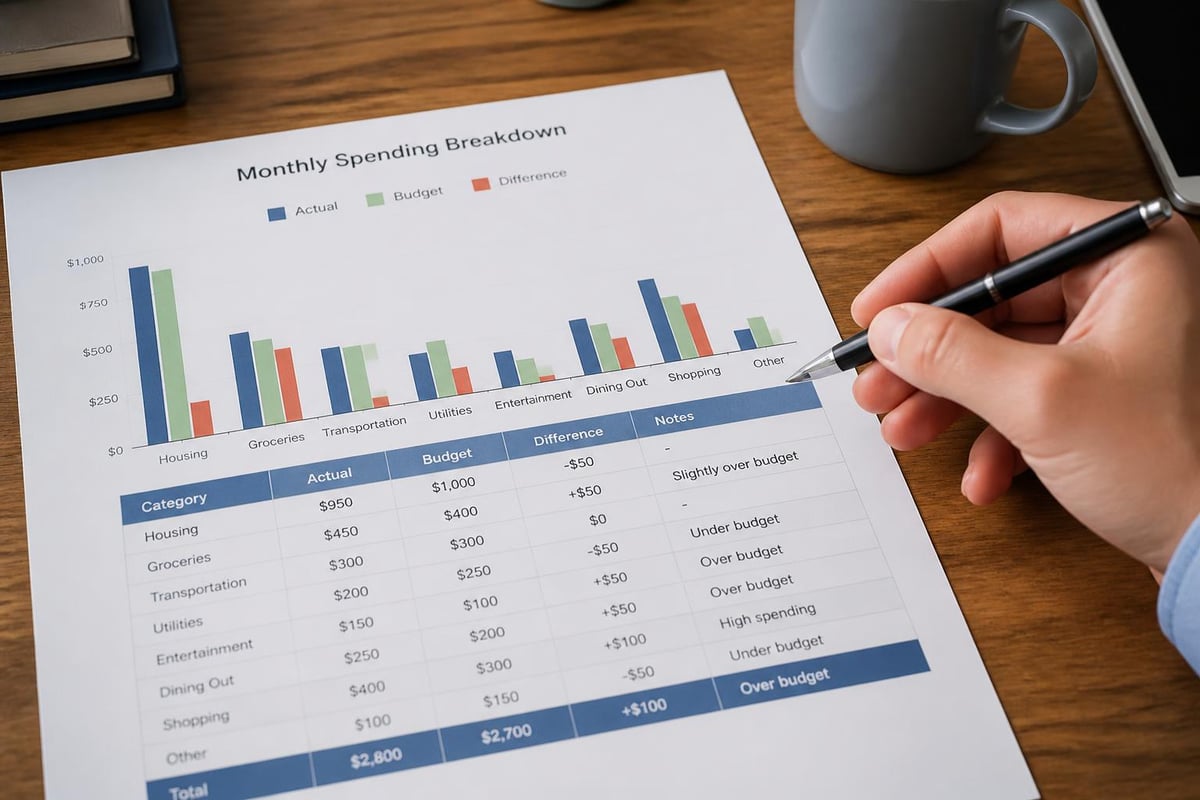
Beyond basic transaction tracking, your bank statement for credit card spending reveals valuable patterns that inform better financial decisions. Regular analysis helps identify spending trends, budget leaks, and opportunities for savings.
Spending Pattern Recognition
Review several months of statements to identify recurring expenses and seasonal spending variations. This historical perspective helps create realistic budgets based on actual behavior rather than aspirational goals.
Common patterns to analyze include:
- Monthly subscription services that may no longer provide value
- Seasonal expenses like holiday shopping or summer travel
- Category-specific trends such as dining out or entertainment spending
- Weekend versus weekday purchasing habits
- Online shopping patterns and impulse purchases
Nusenda Credit Union suggests using statement data to set category-specific spending limits that align with your financial goals. This targeted approach proves more effective than generic budget percentages.
Credit Utilization Monitoring
Your bank statement for credit card usage directly impacts your credit score through utilization ratio, which compares your statement balance to your credit limit. Credit scoring models typically favor utilization below 30 percent, with optimal scores achieved under 10 percent.
Calculate your utilization ratio by dividing your statement balance by your credit limit and multiplying by 100. If you consistently run high utilization, consider these strategies:
- Make multiple payments throughout the month
- Request credit limit increases on established accounts
- Distribute purchases across multiple cards
- Pay down balances before the statement closing date
Statement timing matters significantly for credit reporting. Most issuers report your statement balance to credit bureaus, not your current balance, making the closing date crucial for credit score optimization.
Working With Quarterly and Annual Statement Reviews
While monthly reviews handle routine tracking, quarterly and annual analysis of your bank statement for credit card activity provides strategic insights for long-term financial planning. These comprehensive reviews help businesses prepare for tax filing and individuals assess progress toward financial goals.
Quarterly Business Reviews
Businesses should compile and analyze three-month bank statement data quarterly to identify trends and make informed decisions about budget allocations. This regular cadence catches problems early while providing enough data for meaningful pattern recognition.
Quarter-end reviews should include:
- Category totals comparing actual spending to budgeted amounts
- Vendor analysis identifying opportunities to consolidate suppliers or negotiate better rates
- Unusual transactions requiring additional documentation or explanation
- Tax-deductible expenses ensuring proper categorization for year-end reporting
- Payment patterns assessing whether you're carrying balances unnecessarily
Many e-commerce businesses, for instance, track fulfillment and shipping expenses carefully to optimize their operations and maintain profitability as they scale through partnerships with services like e-commerce fulfillment providers.
Annual Statement Summaries
Year-end credit card statements provide valuable summaries showing total fees paid, interest charges accumulated, and rewards earned throughout the year. Synchrony highlights the importance of reviewing these annual totals to assess the true cost of credit card usage.
This annual perspective helps you evaluate:
- Whether rewards earned justify annual fees charged
- Total interest paid on carried balances
- Effectiveness of your payment strategies
- Changes needed for the upcoming year's financial plan
Industries with complex financial operations, such as companies requiring specialized workforce solutions through partners like staffing services, particularly benefit from comprehensive annual reviews that track labor costs and project-specific expenses across multiple credit accounts.
Tools and Technology for Statement Management
Modern financial management increasingly relies on technology to process, analyze, and archive your bank statement for credit card transactions efficiently. The right tools transform static PDF documents into actionable financial intelligence.
Automation Benefits
Automated statement processing eliminates manual data entry errors while dramatically reducing the time required for bookkeeping tasks. Converting PDF statements into structured spreadsheet data enables:
- Automatic categorization based on merchant codes
- Integration with QuickBooks, Xero, and other accounting platforms
- Batch processing of multiple statements simultaneously
- Consistent formatting across different card issuers
- Historical data analysis across multiple years
Moving companies, for example, often track equipment purchases, fuel expenses, and per diem costs across multiple projects and locations. Using digital inventory management platforms alongside automated statement processing creates a comprehensive financial tracking system that scales with business growth.
Accuracy and Compliance
Manual transcription of credit card transactions introduces error rates as high as 4 percent, according to industry studies. These mistakes compound during reconciliation, creating discrepancies that require significant time to resolve.
AI-powered conversion technology achieves 99 percent accuracy rates by recognizing statement formats from hundreds of financial institutions and extracting data with precision. This reliability proves essential for businesses subject to audits or regulatory compliance requirements where documentation accuracy is non-negotiable.
Managing your bank statement for credit card accounts effectively requires understanding statement components, implementing regular review processes, and leveraging appropriate tools for organization and analysis. Whether tracking personal expenses or managing business credit accounts, accurate statement management supports better financial decisions, tax compliance, and fraud prevention. Bank Statement Boss transforms your PDF credit card statements into organized spreadsheets with exceptional accuracy, integrating seamlessly with your accounting workflow while maintaining bank-level security for your sensitive financial data.