
An account statement serves as a fundamental financial document that provides a comprehensive record of all transactions and activities within a specific account over a defined period. Whether you're managing personal finances, running a business, or overseeing multiple financial accounts, understanding how to read and utilize these documents effectively is essential for maintaining accurate financial records and making informed decisions. In 2026, with increasingly digital banking systems and sophisticated financial management tools, account statements have evolved beyond simple transaction lists into powerful analytical resources that can transform how you manage money.
What Is an Account Statement
An account statement represents a detailed summary of financial activity within an account during a specific timeframe, typically issued monthly or quarterly by financial institutions. Understanding what account statements are helps establish the foundation for effective financial management across all account types.
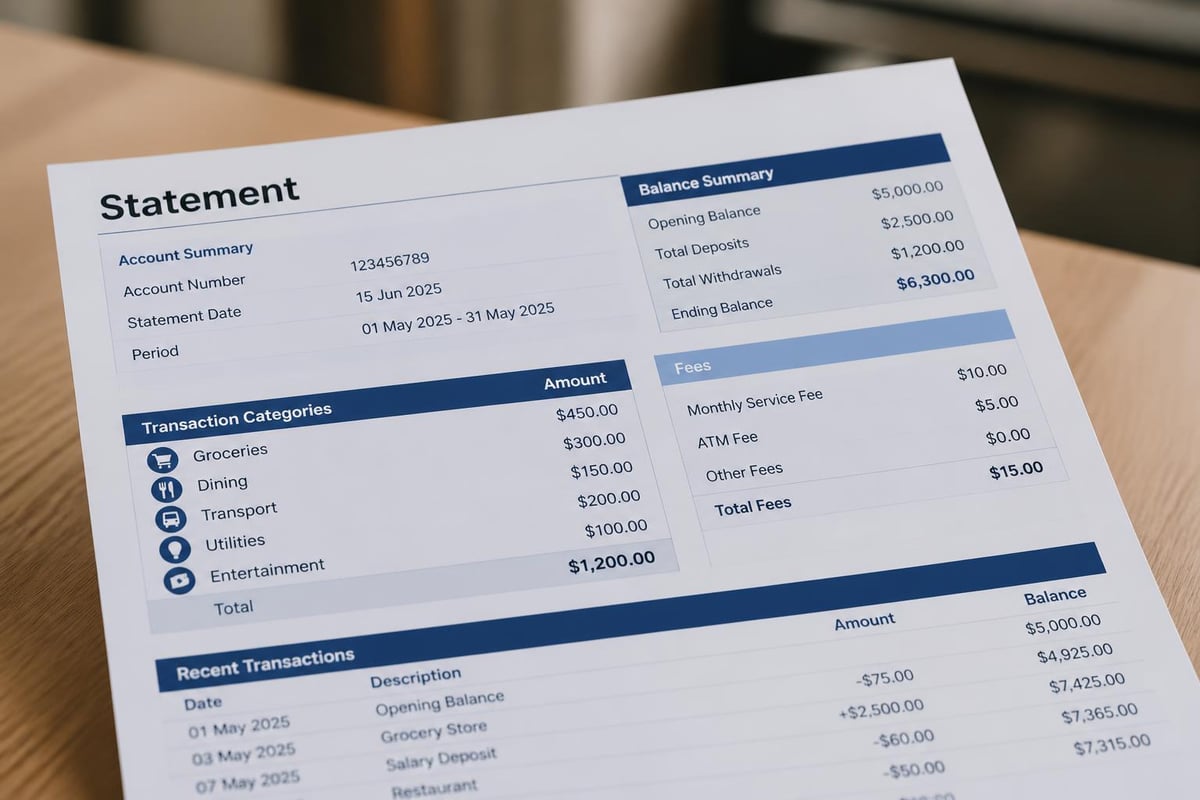
These documents include critical information such as:
- Opening and closing balances for the statement period
- Detailed transaction history with dates, descriptions, and amounts
- Fees charged and interest earned or paid
- Account holder information and statement period dates
- Running balance after each transaction
Primary Functions of Account Statements
Account statements serve multiple essential purposes in financial management. They provide verifiable proof of transactions, enabling account holders to track spending patterns and identify potential unauthorized charges. Financial institutions use these documents to maintain transparency and comply with regulatory requirements.
For businesses, account statements become crucial tools for reconciliation processes. Accountants rely on these records to match company books with bank records, ensuring accuracy in financial reporting. Tax preparation also depends heavily on accurate account statement data to substantiate deductions and report income correctly.

Types of Account Statements
Financial institutions issue various types of account statements tailored to specific account categories. Each type contains unique elements designed to reflect the particular nature of transactions and account activity.
Bank Account Statements
Bank account statements represent the most common type, covering checking and savings accounts. These documents list all deposits, withdrawals, checks cleared, electronic transfers, and ATM transactions. Reading a bank statement effectively requires understanding each section and how transactions affect your balance.
Monthly bank statements typically arrive through mail or electronic delivery. Digital statements have become increasingly popular, offering instant access and environmental benefits while maintaining the same comprehensive information as paper versions.
Credit Card Statements
Credit card statements differ from bank statements by focusing on purchases, payments, fees, and interest charges. These documents include crucial details about payment due dates, minimum payment amounts, and annual percentage rates. Understanding bank statements for credit cards helps cardholders avoid late fees and manage credit utilization effectively.
| Statement Type | Primary Focus | Key Components | Frequency |
|---|---|---|---|
| Bank Account | Deposits & Withdrawals | Transaction history, balance | Monthly |
| Credit Card | Purchases & Payments | Balance, APR, minimum payment | Monthly |
| Investment Account | Trading Activity | Portfolio value, trades, dividends | Monthly/Quarterly |
| Loan Statement | Payment History | Principal, interest, remaining balance | Monthly |
Investment Account Statements
Investment account statements provide detailed information about portfolio holdings, trades executed, dividends received, and account value changes. These statements often include performance metrics and tax information relevant to capital gains and losses.
Brokerage firms typically issue these statements monthly, with additional quarterly and annual summaries that consolidate activity and provide comprehensive tax documentation.
Key Components of an Account Statement
Every account statement contains standardized elements that provide essential financial information. Recognizing these components enables better financial oversight and management.
Account Information Section
The header section identifies the account holder, account number, and statement period. This information establishes the scope of transactions covered and confirms the account ownership. Contact information for the financial institution and customer service details typically appear in this section as well.
Transaction Details
The transaction section forms the core of any account statement, listing each activity chronologically or by transaction type. Each entry includes:
- Transaction date when the activity occurred
- Posting date when the transaction cleared
- Description identifying the merchant or transfer source
- Amount showing debits or credits
- Running balance after each transaction
Summary Information
Account statements conclude with summary sections that aggregate key data points. Opening balances, total deposits, total withdrawals, fees charged, and closing balances appear clearly displayed. This summary enables quick reconciliation and financial snapshot analysis.
How to Read Your Account Statement Effectively
Interpreting account statements correctly requires systematic review and attention to detail. Developing a consistent review process helps identify errors, track spending, and maintain financial awareness.
Step-by-Step Review Process
- Verify account information matches your records
- Check opening balance against previous closing balance
- Review each transaction for accuracy and authorization
- Identify unfamiliar charges for investigation
- Confirm closing balance matches your expectations
- Note any fees and understand their causes
TD Bank's comprehensive guide offers additional insights into interpreting statement sections and managing finances based on statement data.
Common Statement Sections Explained
Understanding specialized sections improves statement comprehension. Interest calculations, fee schedules, and transaction codes may require reference to account agreements. Many institutions provide glossaries within statements or online resources explaining terminology.
The account summary typically appears prominently, showing the most critical figures at a glance. Transaction categories may be grouped by type, such as deposits, withdrawals, electronic transfers, and fees, making pattern recognition easier.
Best Practices for Managing Account Statements
Effective statement management extends beyond simple review to encompass organization, analysis, and integration with broader financial strategies.
Regular Review Schedule
Establishing a consistent review schedule prevents small issues from becoming significant problems. Most financial experts recommend reviewing account statements within days of receipt, whether paper or electronic.
- Weekly spot checks for high-volume accounts
- Monthly comprehensive reviews for all accounts
- Quarterly analysis for spending patterns and trends
- Annual consolidation for tax preparation and financial planning
Digital Organization Systems
Modern financial management benefits significantly from digital organization. Scanning paper statements or downloading electronic versions creates searchable archives accessible from anywhere. Cloud storage with appropriate security measures ensures document preservation while enabling efficient retrieval.
Creating folder hierarchies by year, institution, and account type streamlines organization. Consistent naming conventions further enhance searchability when specific statements are needed for verification or documentation purposes.
Converting Account Statements for Analysis
Traditional PDF account statements, while secure and official, present challenges for detailed financial analysis. Converting these documents into spreadsheet formats unlocks powerful analytical capabilities and integration with accounting systems.
Many businesses and individuals struggle with manual data entry from PDF statements, a process prone to errors and extremely time-consuming. Modern conversion solutions leverage artificial intelligence to extract transaction data accurately and efficiently. Services that convert PDF bank statements to spreadsheets provide compatibility with popular accounting platforms while maintaining data accuracy rates approaching 99%.
Benefits of Spreadsheet Conversion
Spreadsheet formats enable advanced analysis impossible with static PDF documents. Pivot tables, filtering, and formula calculations transform raw transaction data into actionable financial insights.
| Analysis Type | Capability | Business Benefit |
|---|---|---|
| Spending Categories | Automated classification | Budget optimization |
| Trend Analysis | Historical comparisons | Financial forecasting |
| Reconciliation | Automated matching | Error detection |
| Tax Preparation | Transaction filtering | Documentation efficiency |
Converting account statements to Excel or CSV formats facilitates integration with accounting software, financial planning tools, and tax preparation applications. This interoperability reduces duplicate data entry and improves accuracy across financial management systems.

Account Statement Reconciliation
Reconciliation represents one of the most critical uses of account statements, ensuring internal records match bank documentation. This process identifies discrepancies, prevents fraud, and maintains financial accuracy.
The Reconciliation Process
Reconciliation involves comparing company or personal records against the official account statement. Outstanding checks, deposits in transit, and bank fees must be accounted for to achieve accurate reconciliation.
Professional accounting standards require regular reconciliation for all business accounts. Understanding ledger entries complements statement reconciliation by ensuring both sides of the comparison use consistent accounting principles.
Identifying and Resolving Discrepancies
Differences between records and statements require investigation. Common causes include:
- Timing differences from transactions not yet cleared
- Bank fees not recorded in internal books
- Mathematical errors in manual record-keeping
- Unauthorized transactions requiring immediate attention
- Duplicate entries from processing errors
Prompt resolution maintains financial accuracy and prevents compounding errors. Documenting reconciliation adjustments creates audit trails supporting financial integrity.
Security and Statement Access
Account statement security has become increasingly important as digital delivery methods expand. Protecting sensitive financial information requires understanding both institutional security measures and personal responsibility.
Electronic Statement Security
Financial institutions employ multiple security layers for online statement access. Multi-factor authentication, encryption, and secure browsing protocols protect data transmission. Users must complement these measures with strong passwords and regular credential updates.
Downloading statements requires secure storage practices. Password-protected files, encrypted storage solutions, and limited access sharing minimize exposure risks. Understanding bank-level security standards helps evaluate service providers handling sensitive financial documents.
Paper Statement Considerations
Physical statements require proper disposal methods to prevent identity theft. Shredding documents before discarding eliminates risks from dumpster diving and mail theft. Secure storage for retained statements protects against unauthorized physical access.
Regulatory Requirements and Retention
Account statements serve legal and regulatory purposes beyond personal financial management. Understanding retention requirements ensures compliance and protects legal interests.
Required Retention Periods
Tax authorities and regulatory agencies specify minimum retention periods for financial documents. Individual tax returns generally require seven-year retention of supporting documentation, including account statements substantiating deductions and income.
Business account statements face longer retention requirements, often extending ten years or more depending on industry regulations and potential audit exposure. Legal disputes may require statement production years after transactions occur, making extended retention prudent.
Compliance Considerations
Businesses must maintain account statements supporting financial reporting obligations. Public companies face stricter requirements under securities regulations, while private businesses answer to tax authorities and potential creditors.
The Corporate Finance Institute's overview explains how account statements integrate with broader financial planning and monitoring systems, particularly for investment and wealth management contexts.
Using Account Statements for Financial Planning
Beyond reconciliation and compliance, account statements provide valuable data for strategic financial planning. Analyzing spending patterns, cash flow cycles, and transaction trends informs better financial decisions.
Spending Pattern Analysis
Regular statement review reveals spending habits that may otherwise go unnoticed. Categorizing transactions by type identifies areas of excessive spending or opportunities for cost reduction. Subscription services, recurring charges, and discretionary purchases become visible through systematic analysis.
Creating monthly spending reports from statement data enables budget comparison and adjustment. Variance analysis highlights deviations from planned spending, triggering corrective actions before minor issues become significant problems.
Cash Flow Management
Business account statements provide essential cash flow visibility. Understanding payment timing, revenue cycles, and expense patterns enables better working capital management. Anticipating cash needs prevents overdrafts and optimizes fund allocation.
Seasonal businesses particularly benefit from historical statement analysis. Identifying peak revenue and expense periods allows proactive planning for lean periods and prevents cash crunches during predictable cycles.
Common Account Statement Issues
Even with careful management, account statement issues occasionally arise. Recognizing common problems and understanding resolution processes minimizes disruption and protects financial interests.
Missing or Delayed Statements
When expected account statements don't arrive, immediate action prevents missed payments and oversight gaps. Contacting the financial institution verifies delivery methods and confirms address accuracy. Switching to electronic delivery eliminates most postal delays and delivery failures.
Transaction Disputes
Unrecognized or incorrect charges require prompt dispute filing. Most institutions impose time limits for challenging transactions, making regular statement review essential. Documentation supporting disputes improves resolution likelihood and speeds processing.
Understanding bank statement formats helps identify legitimate transactions that may appear unfamiliar due to merchant processing names differing from familiar business names.
Fee Assessments
Account statements frequently include various fees that surprise account holders. Monthly maintenance fees, overdraft charges, ATM fees, and service charges can accumulate significantly. Reviewing fee sections carefully and understanding account terms enables fee avoidance through behavior modification or account type changes.
Many fees qualify for reversal upon request, particularly for first-time occurrences or extenuating circumstances. Maintaining good account standing and communicating with customer service often results in fee waivers that preserve account profitability.
Modern Technology and Account Statements
Technology has transformed how account statements are created, delivered, and utilized. Understanding current capabilities and emerging trends positions users to maximize statement value.
AI-Powered Statement Analysis
Artificial intelligence now enables automated transaction categorization, anomaly detection, and spending pattern recognition. Machine learning algorithms identify unusual activity that may indicate fraud or accounting errors, providing proactive alerts before problems escalate.
Advanced systems learn individual spending patterns and flag deviations warranting attention. These technologies augment human review, making statement analysis more efficient and comprehensive.
Integration Capabilities
Modern financial management platforms integrate directly with financial institutions, importing account statement data automatically. This connectivity eliminates manual entry while maintaining up-to-date financial records. Real-time synchronization provides current financial snapshots rather than waiting for monthly statement periods.
API connections enable bidirectional data flow, allowing accounting systems to reconcile automatically and flag discrepancies for human review. These integrations reduce administrative burden while improving accuracy across financial management systems.
Account statements remain fundamental financial documents providing essential transaction records, reconciliation capabilities, and analytical insights for effective money management. Developing systematic review processes, implementing secure storage practices, and leveraging modern conversion technologies transforms these documents from simple transaction lists into powerful financial management tools. Bank Statement Boss helps businesses and individuals unlock the full analytical potential of their account statements through AI-powered PDF conversion that achieves 99% accuracy while maintaining bank-level security standards, enabling seamless integration with accounting platforms and spreadsheet analysis tools for better financial decision-making.