
A us bank statement serves as the financial backbone for individuals and businesses across the United States, providing a detailed record of every transaction that flows through your account. Whether you're managing personal finances, preparing for a loan application, or handling business accounting, understanding how to read and utilize these documents can significantly impact your financial success. The modern us bank statement has evolved from simple paper summaries to complex digital documents that contain crucial information about your spending habits, account health, and financial patterns.
Understanding the Core Components of Your US Bank Statement
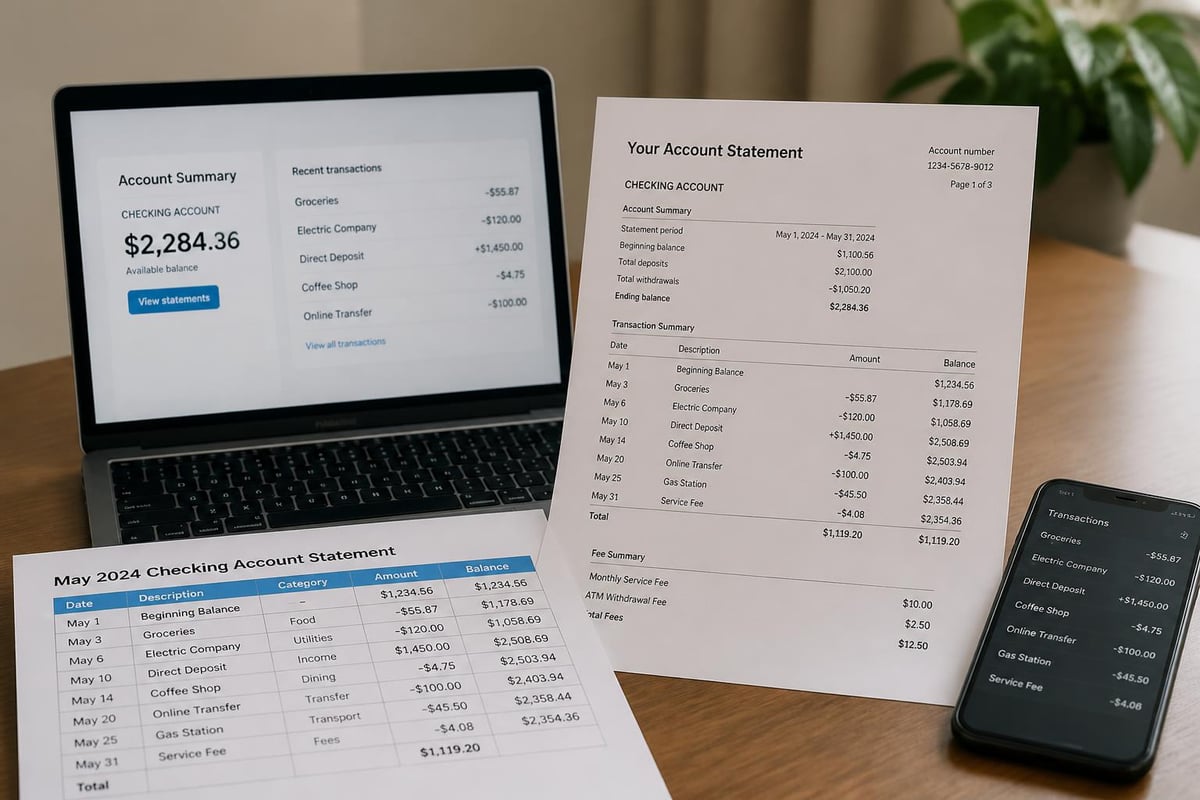
Every us bank statement follows a standardized structure designed to provide comprehensive account information. What a bank statement shows includes essential details that help account holders track their financial activity and identify potential issues before they escalate.
Account Information and Header Details
The top section of your us bank statement contains critical identifying information that establishes the document's authenticity and relevance. This area typically includes:
- Your full legal name and current mailing address
- Account number and account type designation
- Statement period with specific start and end dates
- Customer service contact information
- Bank routing number for wire transfers
Account holders should verify this information immediately upon receiving each statement to ensure accuracy and detect any unauthorized changes to contact details.
Transaction History and Categories
The transaction section represents the heart of any us bank statement, listing every debit and credit that occurred during the statement period. Modern statements organize transactions chronologically and often include merchant names, transaction dates, posting dates, and reference numbers.
| Transaction Type | Common Examples | Impact on Balance |
|---|---|---|
| Deposits | Payroll, transfers, check deposits | Increases balance |
| Withdrawals | ATM withdrawals, debit purchases | Decreases balance |
| Electronic Payments | Bill pay, ACH transfers | Decreases balance |
| Fees | Monthly maintenance, overdraft | Decreases balance |
Understanding how to read each section helps account holders maintain accurate records and spot discrepancies quickly.

The Critical Role of Bank Statements in Financial Management
Financial institutions issue a us bank statement monthly to provide account holders with a comprehensive overview of their banking activity. These documents serve multiple purposes beyond simple record-keeping, functioning as essential tools for budgeting, tax preparation, and financial planning.
Budgeting and Expense Tracking
Analyzing your us bank statement reveals spending patterns that might otherwise go unnoticed. By categorizing transactions, you can identify areas where expenses exceed expectations and adjust your budget accordingly. Many account holders discover subscription services they forgot about or recognize recurring charges that no longer serve their needs.
Regular statement review helps maintain financial discipline and prevents budget drift over time. When you examine where money actually goes versus where you intended it to go, you gain valuable insights into your financial behavior.
Fraud Detection and Security Monitoring
One of the most important functions of reviewing your us bank statement involves identifying unauthorized transactions. Bank statements reveal fees and potential fraud indicators that require immediate attention to prevent further financial damage.
Early detection makes a significant difference in fraud cases. Banks typically provide a limited window for reporting unauthorized transactions, often requiring notification within 60 days of the statement date. Missing this deadline could leave you responsible for fraudulent charges.
Documentation for Financial Applications
Lenders, landlords, and financial institutions frequently request recent us bank statement copies to verify income, assess financial stability, and evaluate creditworthiness. These documents provide third-party verification of your financial claims and demonstrate your ability to manage money responsibly.
- Mortgage applications typically require 2-3 months of statements
- Rental applications may request 1-2 months of recent activity
- Business loan applications often need 6-12 months of statements
- Visa applications for international travel require proof of funds
Digital Formats and Accessibility Options
The transition from paper to digital has transformed how Americans access and manage their us bank statement records. Most financial institutions now offer multiple delivery methods to accommodate different preferences and needs.
PDF Bank Statements
PDF format has become the standard for digital us bank statement delivery, offering several advantages over traditional paper statements. These files maintain consistent formatting across devices, preserve the official appearance of the document, and provide password protection capabilities for enhanced security.
However, PDF statements present challenges when you need to analyze data or import information into accounting systems. Converting these documents into usable formats often requires specialized tools. Services that convert PDF bank statements to usable spreadsheets can transform static documents into dynamic data that integrates seamlessly with financial software.
Online Banking Portal Access
Modern banking platforms allow customers to access their us bank statement history through secure online portals. This approach offers several benefits:
- Immediate access to statements dating back several years
- Ability to download multiple statement periods simultaneously
- Search functionality to locate specific transactions quickly
- Environmental benefits from reduced paper consumption
- Lower risk of physical document loss or theft
Most institutions maintain digital records for at least seven years, though policies vary by bank. Understanding your bank's statement basics helps ensure you download and archive important documents before they become unavailable.
Common Fees and Charges on US Bank Statements
Understanding the fee structure on your us bank statement helps identify opportunities to reduce banking costs and optimize account selection. Banks charge various fees for services and account maintenance, and these charges can significantly impact your bottom line over time.
Monthly Maintenance Fees
Many checking and savings accounts assess monthly maintenance fees unless account holders meet specific requirements such as minimum balance thresholds or direct deposit arrangements. These fees typically range from $5 to $25 per month, accumulating to $60-$300 annually.
Review your statement carefully to determine whether you're meeting waiver requirements or if switching to a different account type might eliminate these charges entirely.
Transaction-Based Charges
Certain account activities trigger fees that appear on your us bank statement. ATM fees for using out-of-network machines, overdraft charges for insufficient funds, and wire transfer fees for domestic or international money movement can add up quickly.
| Fee Type | Typical Range | Prevention Strategy |
|---|---|---|
| ATM (out-of-network) | $2.50 - $3.50 | Use bank's ATM network |
| Overdraft | $25 - $35 per occurrence | Enable overdraft protection |
| Wire Transfer (domestic) | $15 - $30 | Use ACH transfers instead |
| Wire Transfer (international) | $35 - $50 | Compare alternative services |
| Stop Payment | $15 - $35 | Resolve payment issues promptly |
Reconciliation and Record-Keeping Best Practices
Matching your us bank statement against your personal records ensures accuracy and helps identify errors or fraudulent activity. This process, known as reconciliation, represents a fundamental accounting practice for both individuals and businesses.
Monthly Reconciliation Process
Begin reconciliation by gathering your us bank statement and personal transaction records. Compare each entry systematically, marking off matched transactions and investigating any discrepancies. This methodical approach reveals posting errors, duplicate charges, or missing transactions that require follow-up with your bank.
Professional accountants recommend reconciling within one week of receiving each statement while transactions remain fresh in your memory. Delaying this task increases the difficulty of remembering transaction details and identifying legitimate versus questionable charges.
Organizing Statement Archives
Maintaining organized us bank statement archives provides several benefits for tax purposes, legal documentation, and financial planning. Consider these storage strategies:
- Digital filing systems using cloud storage with encrypted folders
- Chronological organization by year and month for easy retrieval
- Backup copies stored in multiple secure locations
- Retention schedules aligned with IRS recommendations (typically 7 years)
Those working with financial data regularly may benefit from resources like The Analytics Doctor for advanced spreadsheet organization and automation strategies that simplify statement management.

Leveraging Bank Statements for Business Operations
Business owners rely heavily on their us bank statement records for accounting, tax preparation, and financial analysis. These documents provide the foundation for understanding cash flow, tracking business expenses, and maintaining compliance with tax regulations.
Integration with Accounting Platforms
Modern businesses need efficient methods to transfer us bank statement data into accounting software like QuickBooks, Xero, or FreshBooks. Manual data entry consumes valuable time and introduces errors that can compromise financial accuracy.
Automated conversion solutions address this challenge by extracting transaction data from PDF statements and formatting it for direct import into accounting platforms. This approach reduces manual work while improving data accuracy across financial systems. Understanding the proper format for bank details ensures smooth integration with your chosen accounting software.
Tax Preparation and Documentation
The IRS accepts us bank statement records as supporting documentation for business deductions and income verification. During audits or routine tax preparation, these statements help substantiate claimed expenses and demonstrate proper record-keeping practices.
Organizing statements by tax year simplifies the preparation process and ensures you can quickly locate specific transactions when needed. Many businesses maintain separate accounts for different business functions, requiring careful coordination of multiple statement sets.
Cash Flow Analysis
Regular review of your business us bank statement enables proactive cash flow management. By analyzing deposit patterns, payment timing, and seasonal variations, business owners can anticipate shortfalls and plan accordingly.
Comparing statements across multiple periods reveals trends that inform strategic decisions about inventory management, hiring timing, and capital investments. This historical perspective proves invaluable when forecasting future needs or securing business financing.
Security Considerations for Bank Statement Handling
Protecting your us bank statement information requires vigilance and adherence to security best practices. These documents contain sensitive personal and financial data that criminals can exploit for identity theft or financial fraud.
Physical Document Security
Paper statements arriving by mail should be secured immediately upon receipt. Store them in locked filing cabinets or safes, and shred statements before disposal using cross-cut shredders that render information unreadable.
Never leave statements in unsecured locations such as car glove compartments, office desks, or visible areas in your home where visitors might access them.
Digital Security Measures
Electronic us bank statement files require protection through multiple security layers:
- Password protection for PDF files and storage devices
- Encrypted storage using secure cloud services or encrypted drives
- Regular password updates following strong password guidelines
- Two-factor authentication for online banking access
- Secure email practices avoiding statement transmission via unencrypted email
Research on two-factor authentication adoption in banking contexts highlights the importance of additional security layers for protecting financial information.
Sharing Statements Safely
When providing us bank statement copies to third parties for legitimate purposes, take precautions to protect sensitive information. Consider redacting account numbers partially, transmitting documents through secure portals rather than email, and verifying recipient identity before sharing.
Some situations permit sharing statements with partial information obscured while still meeting verification requirements. Always ask whether redacted versions are acceptable before sharing complete financial details.
Advanced Statement Analysis Techniques
Sophisticated users extract deeper insights from their us bank statement data through advanced analytical approaches. These techniques reveal patterns and opportunities that basic review methods might miss.
Transaction Pattern Recognition
Analyzing transaction frequency, timing, and amounts across multiple statement periods uncovers behavioral patterns. You might discover that certain expenses cluster around specific dates, recurring charges vary in amount unexpectedly, or income deposits fluctuate more than anticipated.
Technology advances in table detection and structure recognition for financial documents enable more sophisticated automated analysis of statement data, particularly when dealing with complex formats or large transaction volumes.
Comparative Analysis Across Periods
Placing multiple us bank statement periods side by side enables trend identification and variance analysis. This approach helps answer questions such as:
- Are monthly expenses increasing or decreasing over time?
- Which expense categories show the greatest volatility?
- How do seasonal patterns affect account balances?
- Are fee charges increasing due to account behavior changes?
Business owners particularly benefit from this analytical approach when evaluating operational efficiency and identifying cost-saving opportunities.
Data Visualization for Better Understanding
Converting us bank statement data into visual formats such as charts and graphs makes patterns more apparent and facilitates decision-making. Pie charts showing expense distribution, line graphs tracking balance changes, and bar charts comparing monthly totals provide intuitive insights that raw numbers obscure.
Tools that convert bank statements to Excel format enable easy creation of these visualizations using spreadsheet charting capabilities.
Mobile Access and Statement Management
Smartphone applications have revolutionized how Americans access and manage their us bank statement information. Mobile banking apps provide on-demand access to account details, transaction history, and statement downloads from anywhere.
Mobile App Features
Modern banking apps offer comprehensive statement management capabilities that rival desktop experiences. Users can view real-time transaction updates, download statements in multiple formats, and receive alerts about account activity directly on their mobile devices.
The convenience of mobile access encourages more frequent statement review, which improves fraud detection and financial awareness. Learning how to download statements using mobile apps maximizes the utility of these powerful tools.
Notification and Alert Systems
Configuring alerts for specific account activities transforms your us bank statement from a passive record into an active monitoring system. Banks offer customizable notifications for:
- Low balance warnings below specified thresholds
- Large transaction alerts exceeding predetermined amounts
- Deposit confirmations for incoming funds
- Unusual activity patterns detected by fraud systems
- Statement availability announcements
These proactive notifications help account holders stay informed about their financial status without manually checking balances constantly.
Statement Requirements for Different Financial Situations
Various life circumstances create specific us bank statement needs that go beyond routine monthly review. Understanding these requirements helps ensure you maintain appropriate documentation for your situation.
Loan and Mortgage Applications
Lenders scrutinize us bank statement records to assess financial stability and verify income claims. They look for consistent deposit patterns, adequate reserves, and responsible account management without excessive overdrafts or returned items.
Preparing for loan applications involves gathering multiple consecutive months of statements and reviewing them from a lender's perspective. Address any questionable items or unusual patterns before submission to avoid delays or additional documentation requests.
Immigration and Visa Processes
International visa applications often require us bank statement documentation demonstrating financial capacity to support yourself during travel or residency. Different visa types mandate varying documentation periods, typically ranging from three to six months of recent statements.
Resources about 3 month bank statement PDF requirements help applicants understand proper documentation formatting and presentation for immigration purposes.
Rental Applications and Background Checks
Landlords request us bank statement copies to verify rental payment capability and assess tenant reliability. Recent statements showing consistent income and adequate balances provide confidence that applicants can meet monthly rent obligations.
Some rental applications accept checking statements specifically rather than all account types, focusing on the primary account used for bill payments and living expenses.
Regulatory Framework and Consumer Protections
Federal regulations govern how banks produce, deliver, and maintain us bank statement records. These laws protect consumers while ensuring transparency in banking relationships.
Truth in Savings Act Requirements
The Truth in Savings Act mandates specific disclosure requirements for us bank statement formatting and content. Banks must clearly itemize all fees, provide accurate interest calculations, and present information in standardized ways that facilitate consumer understanding.
This regulatory framework ensures consistency across institutions, making it easier for consumers to compare accounts and understand their financial position regardless of which bank they choose.
Electronic Statements and E-SIGN Act
The Electronic Signatures in Global and National Commerce Act (E-SIGN) established the legal framework for electronic us bank statement delivery. Under this law, electronic statements carry the same legal weight as paper versions, provided customers consent to electronic delivery and can access the documents.
Banks must provide methods for customers to withdraw consent and return to paper statements at any time. They also must notify customers about hardware and software requirements for accessing electronic statements.
Dispute Resolution and Error Correction
Federal regulations provide consumers with rights to dispute us bank statement errors and unauthorized transactions. The Electronic Fund Transfer Act specifies timeframes for reporting errors and requires banks to investigate disputes promptly.
Understanding these protections helps account holders exercise their rights effectively when statement discrepancies arise. Documentation becomes critical during dispute processes, emphasizing the importance of maintaining organized statement archives.
Industry-Specific Statement Considerations
Different industries face unique challenges related to us bank statement management and utilization. Recognizing these sector-specific needs helps organizations implement appropriate processes and controls.
Healthcare and Medical Practices
Medical practices managing patient payments, insurance reimbursements, and equipment purchases require meticulous us bank statement reconciliation. Regulatory compliance for healthcare financial management demands accurate record-keeping and proper documentation of all monetary transactions.
Multiple revenue streams and complex payment timing create reconciliation challenges that benefit from automated solutions and systematic review processes.
Real Estate and Property Management
Property managers handling security deposits, rent collections, and maintenance disbursements across multiple properties need organized us bank statement tracking for each account. Trust account regulations in many states mandate specific record-keeping practices and regular reconciliation.
Providing statements to property owners as part of monthly reporting requires efficient data extraction and presentation capabilities.
Retail and E-commerce Operations
Businesses processing high transaction volumes through multiple payment processors face complex us bank statement reconciliation requirements. Matching individual sales to corresponding deposits while accounting for processing fees, chargebacks, and settlement timing requires sophisticated tracking systems.
Understanding bank statement formats across different financial institutions helps retailers standardize their reconciliation processes despite banking with multiple institutions.
Managing your us bank statement effectively requires understanding its components, maintaining security protocols, and leveraging the data for financial decision-making. Whether you're an individual tracking personal finances or a business managing complex accounting needs, these documents provide the foundation for financial transparency and control. Bank Statement Boss transforms PDF statements into actionable spreadsheet data with bank-level security, enabling seamless integration with your accounting systems and eliminating manual data entry errors that compromise financial accuracy.