
Requesting bank statements has become an essential task for individuals and businesses managing their financial records. Whether you need historical transactions for tax preparation, loan applications, or accounting reconciliation, understanding the most efficient methods to obtain these documents saves time and ensures you have the right documentation when you need it. This comprehensive guide explores the various channels available for requesting bank statements, the information you'll need to provide, and best practices for managing the process professionally.
Understanding Your Bank Statement Request Options
Financial institutions offer multiple channels for requesting bank statements, each with distinct advantages depending on your timeline and specific needs. Modern banking has evolved beyond traditional branch visits, giving customers unprecedented control over their financial documentation.
Digital Banking Portals
Most banks now provide online access to bank statements through their digital platforms, typically offering anywhere from seven to ten years of historical records. When requesting bank statements through online banking, you can usually download PDF versions immediately without waiting for processing times or paying additional fees.
Key benefits of digital requests include:
- Immediate access to recent statements
- Free downloads for most account types
- Multiple format options (PDF, CSV, or proprietary formats)
- Environmental sustainability through paperless documentation
- 24/7 availability regardless of business hours
The digital approach works particularly well when you need checking statements for recent months or require quick access for time-sensitive applications. However, older statements or specialized formats may require alternative request methods.

Mobile Banking Applications
Mobile apps have transformed requesting bank statements into a process that takes seconds rather than days. These applications mirror the functionality of desktop platforms while adding convenience features like biometric authentication and push notifications when new statements become available.
When using mobile apps for statement requests, ensure you're connected to a secure network and verify the app's authenticity through official app stores. Most banking apps allow you to share statements directly with accounting software or email them to your financial advisor without downloading them to your device first.
Written Request Methods for Bank Statements
Despite digital advancement, written requests remain relevant for specific circumstances requiring formal documentation or when accessing statements beyond the standard retention period.
Crafting Professional Request Letters
Writing a formal bank statement request letter demonstrates professionalism and provides clear documentation of your request. This approach proves particularly valuable for business accounts, legal matters, or when dealing with closed accounts.
Essential elements for your request letter:
- Your full legal name and account number
- Specific date range for the statements you need
- Delivery method preference (email, mail, or in-person pickup)
- Your current contact information
- Signature and date
The letter should be addressed to the branch manager or customer service department. When requesting bank statements for periods older than the standard retention period, explicitly mention your willingness to pay applicable fees and specify the format you need.
| Request Component | Required Information | Example |
|---|---|---|
| Account Identification | Full account number | 1234567890 |
| Time Period | Specific months/years | January 2024 - December 2024 |
| Delivery Preference | Physical or electronic | Email PDF copies |
| Purpose (Optional) | Reason for request | Tax preparation, loan application |
Email Requests and Digital Communication
Many banks accept statement requests via secure email channels, particularly for customers with established relationships. When sending email requests, use your registered email address and include the same information required in formal letters.
Security considerations become paramount with email requests. Never send sensitive account information through unsecured email. Instead, reference your account with partial numbers or use secure messaging systems provided within your online banking portal.
In-Person and Telephone Request Procedures
Traditional request methods still offer advantages for complex situations or when you need immediate assistance understanding your statement history.
Branch Visit Protocols
Visiting your bank branch allows for requesting bank statements while receiving personalized assistance from banking professionals. This method works best when you need certified statements, have questions about specific transactions, or require statements from accounts with complex histories.
Prepare for your branch visit by bringing:
- Government-issued photo identification
- Account number or debit card
- Specific date ranges you need
- Authorization documentation if requesting on behalf of someone else
Branch visits may incur fees for historical statements, especially those beyond two years old. Understanding your bank statement format preferences helps staff provide exactly what you need.
Phone Request Guidelines
Telephone requests combine convenience with personal service, allowing you to speak directly with representatives who can clarify fees, timelines, and delivery options. When requesting bank statements by phone, call from your registered phone number and have your account information readily available for verification.
Phone representatives can explain whether you can request statements early and the distinction between transaction histories and formal statements. This real-time communication helps prevent misunderstandings about what documentation you'll receive.

Fees, Timelines, and Processing Expectations
Understanding the financial and temporal costs associated with requesting bank statements helps you plan accordingly and budget for documentation expenses.
Fee Structures Across Request Types
Banks employ varied fee structures depending on the request method, statement age, and your account type. Digital statements typically remain free, while physical copies or historical documents may incur charges ranging from two to ten dollars per statement.
Premium account holders often receive fee waivers for statement requests, and some banks offer discounted rates when ordering multiple statements simultaneously. Always verify current fees before submitting your request to avoid unexpected charges.
| Request Method | Typical Timeline | Standard Fee Range |
|---|---|---|
| Online Download | Immediate | Free |
| Mobile App | Immediate | Free |
| Email Request | 1-3 business days | Free to $5 |
| Mailed Copy | 5-10 business days | $3-$10 per statement |
| In-Branch Pickup | Same day to 3 days | $2-$8 per statement |
| Historical (5+ years) | 7-14 business days | $10-$25 per statement |
Special Circumstances and Rush Requests
Urgent situations may require expedited statement processing. While most banks accommodate rush requests for additional fees, understanding the general process for obtaining statements helps set realistic expectations about what "expedited" means at your specific institution.
Legal proceedings, audit requirements, or mortgage applications often operate on tight deadlines. Communicate these time constraints when requesting bank statements, as some institutions prioritize requests tied to regulatory compliance or legal obligations.
Managing and Converting Statement Documents
Once you receive your bank statements, proper management ensures you can access and utilize this information effectively throughout its useful life.
Digital Organization Strategies
Digital statements require systematic organization to maintain accessibility. Create a logical folder structure organizing statements by account type, year, and month. Consistent naming conventions like "2026-05-Checking-Statement" enable quick searching and retrieval.
Best practices for digital statement management:
- Store statements in cloud services with encryption
- Maintain local backups on external drives
- Use descriptive file names with dates and account types
- Implement password protection for sensitive documents
- Regularly archive statements older than seven years
Converting PDF Statements to Usable Formats
Many financial professionals and businesses need statement data in spreadsheet format for analysis, reconciliation, or integration with accounting systems. While banks typically provide statements as PDFs, these formats limit data manipulation and integration capabilities. Services that convert PDF bank statements to usable spreadsheets enable seamless import into platforms like QuickBooks while maintaining accuracy and data integrity.
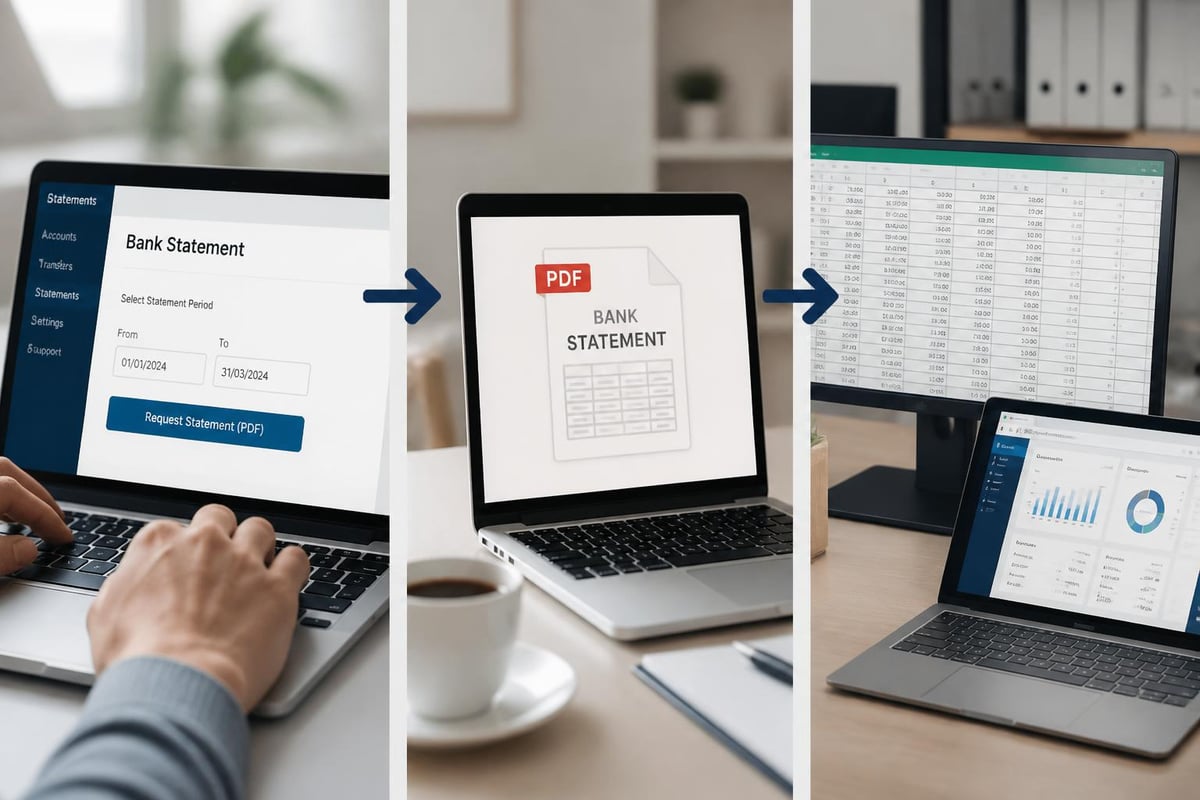
Converting statements becomes particularly valuable when handling 3-month bank statement PDFs for loan applications or when preparing quarterly financial reports. The ability to manipulate transaction data in spreadsheet format accelerates reconciliation and analysis processes significantly.
Best Practices for Repeat Statement Requests
Establishing efficient systems for regularly requesting bank statements reduces administrative burden and ensures consistent financial record maintenance.
Setting Up Automated Statement Delivery
Most banks offer automated statement delivery options, sending monthly statements to your email as they become available. This proactive approach eliminates the need for repeated manual requests and ensures you never miss a statement period.
Configure your email filters to automatically sort incoming statements into designated folders, creating an organized archive without manual intervention. Pair this with calendar reminders to verify statement receipt, catching any delivery failures quickly.
Maintaining Request Documentation
Keep records of all statement requests, including confirmation numbers, request dates, and expected delivery timelines. This documentation proves invaluable when following up on delayed requests or disputing fees.
Create a request tracking system that includes:
- Request submission date and method
- Confirmation or reference number
- Expected delivery date
- Actual receipt date
- Any fees charged
This systematic approach to requesting bank statements transforms a potentially frustrating administrative task into a streamlined, predictable process.
Security Considerations When Requesting Statements
Protecting your financial information during the request and receipt process requires vigilance and adherence to security best practices.
Verification and Authentication
Banks employ multiple verification methods when processing statement requests to prevent unauthorized access to your financial data. Be prepared to answer security questions, provide identification, or verify recent transactions to confirm your identity.
Never provide sensitive information like passwords or full account numbers through unsolicited communications. If you receive unexpected calls claiming to be from your bank, hang up and call the official number on your statement or debit card.
Secure Transmission and Storage
When requesting bank statements through digital channels, verify you're using secure connections (HTTPS) and official banking platforms. Avoid public Wi-Fi networks when accessing sensitive financial documents, as these networks may expose your data to interception.
After receiving statements, implement encryption for digital storage and secure physical storage for paper copies. Shred statements before disposal rather than discarding them intact, preventing identity theft from compromised documents.
Common Questions About Requesting Bank Statements
Understanding frequent questions about banking and statement requests helps you navigate the process more confidently.
How Far Back Can You Request Statements?
Most banks maintain digital records for seven to ten years, aligning with IRS record retention recommendations. However, accessing statements beyond the standard online availability period may require special requests, additional processing time, and higher fees. Some institutions can retrieve statements dating back decades through archive services, though costs increase substantially for very old records.
Can Someone Else Request Your Statements?
Third parties can request your bank statements only with proper authorization. This typically requires written permission, power of attorney documentation, or being listed as an authorized user on the account. Banks take these restrictions seriously to protect customer privacy and prevent unauthorized access to financial information.
What If You Need Statements From a Closed Account?
Requesting bank statements from closed accounts follows similar procedures to active accounts, though processing may take longer as banks must access archived records. Maintain records of old account numbers and approximate closure dates to facilitate these requests. Some banks automatically purge closed account data after specific periods, making early requests advisable.
Understanding Statement Formats and Variations
Banks provide statements in various formats, and understanding these differences helps you request the right documentation. Bank statement formats vary by institution and account type, with some providing detailed transaction categorization while others offer basic chronological listings.
Successfully requesting bank statements requires understanding available channels, preparing necessary information, and following security best practices throughout the process. Whether you need recent statements for routine reconciliation or historical documents for major financial transactions, the methods outlined above provide professional pathways to obtain your financial records efficiently. For businesses and individuals who regularly work with PDF statements and need to integrate this data with accounting systems, Bank Statement Boss offers AI-powered conversion technology that transforms PDF statements into spreadsheet format with exceptional accuracy, streamlining your financial workflows while maintaining bank-level security standards.