
Freelancers face unique financial challenges that traditional banking solutions rarely address. Managing irregular income streams, tracking business expenses separately from personal spending, and maintaining detailed records for tax purposes require specialized tools and features. A dedicated bank for freelancers provides the infrastructure needed to handle these complexities while supporting business growth. Understanding which banking features matter most can transform how independent professionals manage their finances and build sustainable businesses in 2026.
Essential Features in a Bank for Freelancers
Modern banking institutions recognize that freelancers need more than basic checking accounts. The right bank for freelancers should offer tools that address the specific pain points of independent work.
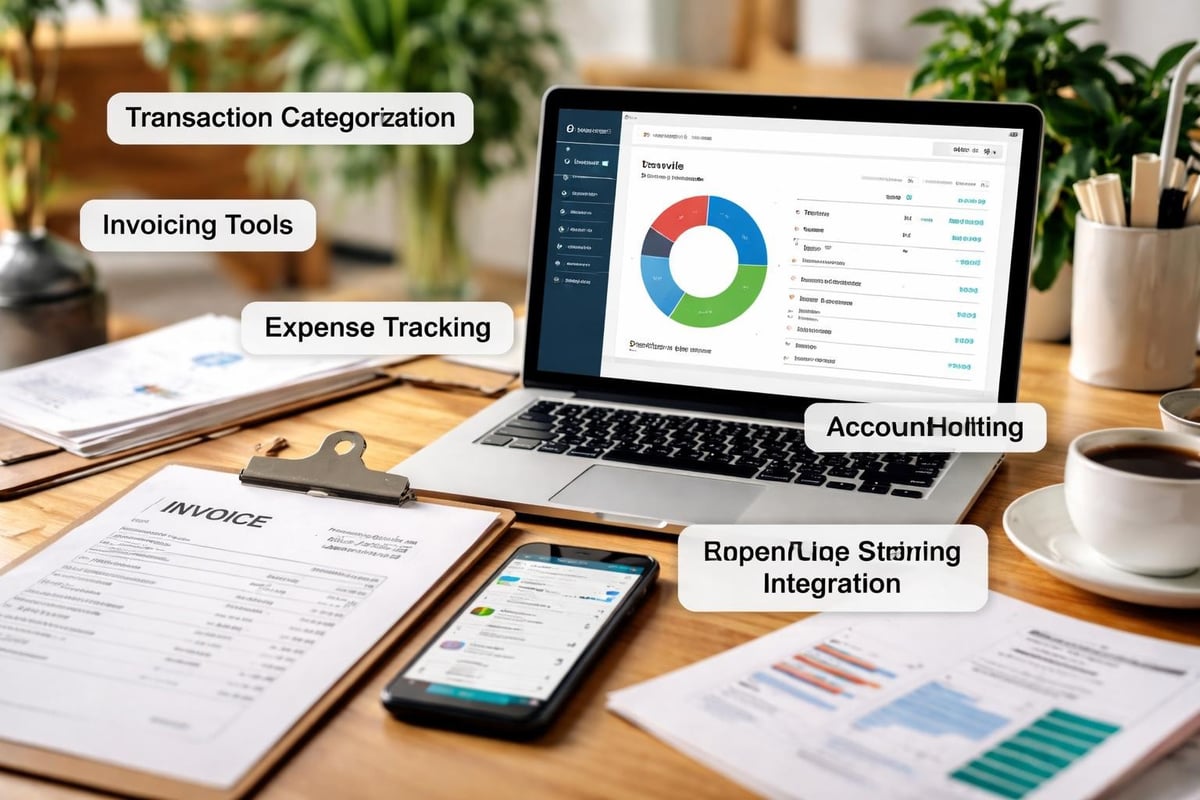
Transaction categorization stands at the top of necessary features. When every coffee meeting might be a business expense and every software subscription needs documentation, automatic categorization saves countless hours during tax season. Many specialized platforms now use AI to learn your spending patterns and accurately sort transactions without manual intervention.
Integration with accounting software eliminates double-entry bookkeeping. The best solutions sync directly with platforms like QuickBooks, Xero, and FreshBooks. This connectivity ensures your financial data flows seamlessly between systems. For those managing multiple statements across different accounts, converting PDF bank statements to usable spreadsheets becomes crucial for comprehensive financial oversight.
Fee Structures That Support Independent Workers
Traditional banks often penalize the irregular deposit patterns common in freelance work. Progressive banking solutions have adapted their fee structures accordingly.
| Fee Type | Traditional Bank | Freelancer-Focused Bank |
|---|---|---|
| Monthly Maintenance | $12-25 | $0-10 |
| Minimum Balance | $1,500-5,000 | $0-500 |
| Transaction Limits | 10-20/month | Unlimited |
| Wire Transfers | $25-35 | $0-15 |
| ACH Transfers | $0-3 | Free |
Zero monthly fees matter significantly when income fluctuates month to month. Some freelancers earn substantial amounts in certain months while experiencing slower periods at other times. A bank that doesn't charge for maintaining lower balances during lean months provides crucial financial flexibility.
Account Types and Structures
Selecting between business and personal accounts represents a critical decision for freelancers. While sole proprietors can technically operate using personal accounts, separating personal and business accounts simplifies financial management substantially.
Business checking accounts designed for freelancers typically include enhanced features not available in personal accounts. These might include higher transaction limits, business debit cards, and dedicated customer support for business-related questions.
Multi-Currency Capabilities
Freelancers working with international clients need banking solutions that handle foreign currencies efficiently. Traditional banks often charge substantial conversion fees and offer poor exchange rates. Modern alternatives provide:
- Real mid-market exchange rates
- Multi-currency account holdings
- International wire transfers at reduced costs
- Currency conversion without hidden markups
Wise and similar platforms have revolutionized how freelancers manage international payments, making cross-border work financially viable for independent professionals across various industries.
Managing Irregular Income Streams
One defining characteristic of freelance work is income variability. Unlike salaried employees who receive predictable paychecks, freelancers might invoice $15,000 one month and $3,000 the next.
Buffer account strategies help smooth these fluctuations. Successful freelancers often maintain separate savings accounts where they deposit excess income from high-earning months. This reserve covers expenses during slower periods and provides emergency funds for unexpected situations.
Automated savings features built into modern banking platforms make this process effortless. You can set rules that automatically transfer percentages of deposits into designated savings accounts. For example, transferring 30% of every deposit over $2,000 builds reserves without requiring constant manual transfers.
Tax Withholding Automation
Freelancers bear responsibility for their own tax withholding, a task that catches many independent workers off guard during their first year. Progressive banks now offer automated tax savings features.
These systems calculate estimated tax obligations based on your income and automatically set aside appropriate amounts. Some platforms even integrate with tax preparation software, making quarterly estimated tax payments straightforward rather than stressful.

Digital Banking Tools for Productivity
The best bank for freelancers extends beyond basic financial services to become a productivity partner. Digital tools integrated into banking platforms can streamline operations significantly.
Invoicing capabilities eliminate the need for separate billing software. Create professional invoices directly through your banking app, send them to clients, and track payment status in real-time. When payments arrive, they're automatically matched to outstanding invoices, providing clear revenue tracking.
Expense management features allow you to photograph receipts immediately after purchases. The system extracts relevant information, categorizes the expense, and attaches the receipt to the corresponding transaction. This eliminates the shoebox full of crumpled receipts that plague many freelancers.
Mobile-First Banking Experiences
Freelancers rarely work from traditional offices. Coffee shops, co-working spaces, client locations, and home offices all serve as workplaces. Mobile banking capabilities must match this flexibility.
Leading platforms offer:
- Mobile check deposit for client payments
- Real-time transaction notifications for immediate expense tracking
- Instant transfers between accounts
- Digital receipt management with cloud storage
- Integrated time tracking for hourly work
These features transform smartphones into complete business management tools, enabling freelancers to handle financial tasks regardless of location.
Integration Ecosystems and Workflow Automation
Modern freelancers use diverse software tools to manage their businesses. Customer relationship management systems, project management platforms, time tracking applications, and accounting software all play crucial roles. The ideal bank for freelancers connects seamlessly with these tools.
Open banking APIs enable direct connections between financial institutions and third-party applications. This connectivity creates powerful automation possibilities. For instance, when you mark a project as complete in your project management system, the integration could automatically generate an invoice, send it to the client, and notify you when payment arrives.
Workflow automation platforms have emerged as valuable tools for freelancers managing complex document processes. These systems can automatically retrieve bank statements, convert them into usable formats, and integrate the data into accounting systems without manual intervention. Such automation reduces administrative burden and minimizes errors in financial record-keeping.
For freelancers managing client acquisition alongside financial operations, lead generation tools can integrate with banking systems to track marketing expenses against client revenue, providing clear return on investment metrics for business development efforts.
Security Considerations for Freelance Banking
Independent professionals often handle sensitive client information and substantial financial transactions. Banking security must meet rigorous standards to protect both personal and business assets.
Two-factor authentication should be mandatory, not optional. The best platforms require multiple verification methods for accessing accounts and authorizing transactions. Biometric authentication through fingerprints or facial recognition adds another security layer while maintaining convenience.
Bank-level encryption protects data during transmission and storage. Look for institutions that employ 256-bit SSL encryption and store data in secure, redundant facilities with comprehensive disaster recovery plans.
Fraud Protection and Monitoring
Freelancers face unique fraud risks. Client payment scams, phishing attempts targeting invoice systems, and unauthorized access attempts occur regularly.
| Security Feature | Importance | What to Look For |
|---|---|---|
| Real-time alerts | Critical | Instant notifications for all transactions |
| Transaction limits | High | Customizable daily/weekly spending caps |
| Card controls | High | Ability to freeze/unfreeze cards instantly |
| Login monitoring | Medium | Alerts for unusual access patterns |
| Purchase verification | Medium | Confirmation required for large transactions |
Advanced platforms now offer AI-powered fraud detection that learns your typical spending patterns and flags anomalies automatically. This technology provides protection without creating friction in legitimate transactions.
Accounting Software Integration
Managing self-employment income requires meticulous record-keeping. Direct integration between banking platforms and accounting software eliminates manual data entry and reduces errors.
Automatic transaction syncing ensures your accounting records stay current without intervention. Each purchase, deposit, or transfer appears in your accounting system within minutes, maintaining real-time financial visibility.
Reconciliation automation matches bank transactions with accounting entries, identifying discrepancies immediately rather than months later during tax preparation. This ongoing verification prevents small errors from compounding into significant problems.
For freelancers working with various statement formats across multiple institutions, the ability to convert PDF bank statements to spreadsheets provides crucial flexibility. This capability ensures complete financial data availability regardless of how banking institutions format their statements.
Savings and Investment Options
A comprehensive bank for freelancers extends beyond checking accounts to support long-term financial health. Retirement planning presents particular challenges for independent workers who lack employer-sponsored 401(k) plans.
High-yield savings accounts should offer competitive interest rates on business reserves and emergency funds. In 2026, rates vary significantly between institutions, making comparison essential. Some freelancer-focused banks offer tiered rates that increase with higher balances, rewarding successful business growth.
Integrated retirement accounts simplify long-term planning. Solo 401(k) and SEP IRA options accessible through your primary banking platform eliminate the complexity of managing separate financial relationships. Automatic contributions based on income percentages ensure consistent retirement savings despite irregular earnings.
Business Growth Capital
Established freelancers often need access to capital for equipment purchases, marketing initiatives, or hiring subcontractors. Banking solutions designed for self-employed professionals increasingly offer business credit options.
Lines of credit provide flexibility for managing cash flow gaps between project completion and client payment. Unlike traditional loans, you only pay interest on amounts actually borrowed, making them cost-effective for short-term needs.

Evaluating Banking Options for Your Freelance Business
Choosing the right financial institution requires careful evaluation of your specific needs and working style. Selecting the right freelancer bank account depends on multiple factors unique to your business.
Industry-specific requirements influence banking needs. Freelance writers have different transaction patterns than web developers or graphic designers. Consider how your work generates revenue and what expense categories dominate your budget.
Transaction volume affects fee structures significantly. If you make dozens of small purchases monthly for various project supplies, unlimited transactions matter more than for freelancers with minimal monthly transactions.
Testing Before Committing
Many modern banking platforms allow you to explore their interfaces through demo accounts or free trial periods. Take advantage of these opportunities to evaluate:
- User interface intuitiveness
- Mobile app functionality
- Customer support responsiveness
- Integration compatibility with existing tools
- Reporting and analytics capabilities
Don't rush this decision. The switching costs for banking relationships, while not prohibitive, involve substantial time and attention. Starting with the right platform saves considerable hassle later.
Customer Support and Resources
Freelancers encounter financial questions at unpredictable times. When a large client payment doesn't arrive as expected or you need to understand a particular transaction, immediate support becomes essential.
24/7 customer service through multiple channels (phone, chat, email) provides peace of mind. Banking options for freelancers increasingly offer dedicated support teams trained specifically on independent worker needs rather than general customer service representatives.
Educational resources help freelancers develop financial literacy. The best institutions provide guides, webinars, and tools covering topics like:
- Quarterly tax estimation and payment
- Business expense categorization for maximum deductions
- Retirement planning for self-employed individuals
- Managing seasonal income fluctuations
- Scaling from solo freelancer to small business
These resources transform your bank from a simple financial service provider into a partner supporting your professional development.
Platform Switching and Data Migration
Despite careful selection, you might eventually need to change banking providers. Business evolution, feature requirements, or better options emerging in the market all provide valid reasons for switching.
Data export capabilities should be comprehensive. Your complete transaction history, categorizations, and attached documentation should export in standard formats compatible with other platforms. CSV, Excel, and PDF formats ensure you maintain complete historical records regardless of future platform choices.
Migration support from new providers eases transitions. Some institutions assign dedicated specialists to help transfer automatic payments, update invoice templates with new account information, and notify key clients about banking changes.
Beyond Basic Banking Services
The most innovative platforms now offer services extending well beyond traditional banking. These enhanced capabilities create comprehensive business management solutions.
Integrated bookkeeping services provide access to professional bookkeepers familiar with freelance finances. Rather than maintaining these services separately, you can access expert help directly through your banking platform, ensuring the professionals reviewing your books have complete transaction visibility.
Tax preparation partnerships connect you with accountants specializing in self-employment taxes. Since these professionals can access your organized financial data directly, preparation becomes faster and more accurate while costing less than traditional accounting services.
Real-World Application and Daily Use
Understanding features theoretically differs from applying them practically. Successful freelancers develop systems and routines maximizing their banking tools' value.
Morning financial reviews taking five minutes can transform financial awareness. Check your balance, review recent transactions, verify expected client payments arrived, and confirm scheduled payments will clear. This daily habit prevents overdrafts and identifies issues immediately.
Weekly reconciliation sessions ensure your records stay accurate. Compare your banking dashboard against project management systems and invoicing platforms. Confirm all completed work has corresponding invoices and expected payments. Flag any discrepancies for immediate follow-up.
Monthly Financial Analysis
Dedicate time monthly to review comprehensive financial metrics. Your bank for freelancers should provide analytics showing:
- Income trends across recent months
- Expense categories and patterns
- Profit margins on different project types
- Cash flow projections based on outstanding invoices
- Progress toward savings and retirement goals
These insights inform strategic business decisions about pricing, service offerings, and capacity management. Financial data transforms from mere record-keeping into actionable business intelligence.
Making the Final Decision
After researching options, testing platforms, and evaluating features, making a final selection requires weighing multiple factors against your priorities. Create a decision matrix scoring potential banks across categories most important to your business.
No single institution will excel across every dimension. Identify your non-negotiable requirements versus nice-to-have features. Some freelancers prioritize low fees above all else, while others value integration ecosystems or customer support more highly.
Remember that your first choice isn't necessarily permanent. Many successful freelancers maintain accounts at multiple institutions, using each for specific purposes. A primary operating account at one bank might complement a high-yield savings account elsewhere and a dedicated tax withholding account at a third institution.
The freelance economy continues growing in 2026, driving innovation in financial services designed specifically for independent professionals. Banking options have never been more sophisticated or accessible. By selecting thoughtfully and leveraging available tools fully, you can establish financial infrastructure supporting sustainable, profitable freelance operations.
Selecting the right bank for freelancers fundamentally impacts how efficiently you manage your independent business and maintain financial clarity. The features, integrations, and support systems you choose determine whether financial management remains a constant struggle or becomes a streamlined component of your professional operations. Bank Statement Boss helps freelancers maintain comprehensive financial records by converting PDF bank statements into organized spreadsheets compatible with major accounting platforms, ensuring you never lose visibility into your financial data regardless of how your banking institutions format their statements.