
Understanding financial documentation is crucial for effective business management and personal finance oversight. A bank credit statement serves as one of the most important records in your financial toolkit, providing detailed information about credit transactions, balances, and account activity. Whether you're applying for a loan, preparing tax documents, or reconciling accounts for your business, knowing how to read and utilize these statements can make the difference between financial clarity and confusion.
What Is a Bank Credit Statement
A bank credit statement is a comprehensive document issued by financial institutions that records all credit-related transactions and activities within a specific period, typically monthly. This statement provides an itemized list of purchases, payments, credits, fees, and the outstanding balance on a credit account. Understanding what bank statements contain helps account holders track their spending patterns and maintain financial accuracy.
Key Components of Credit Statements
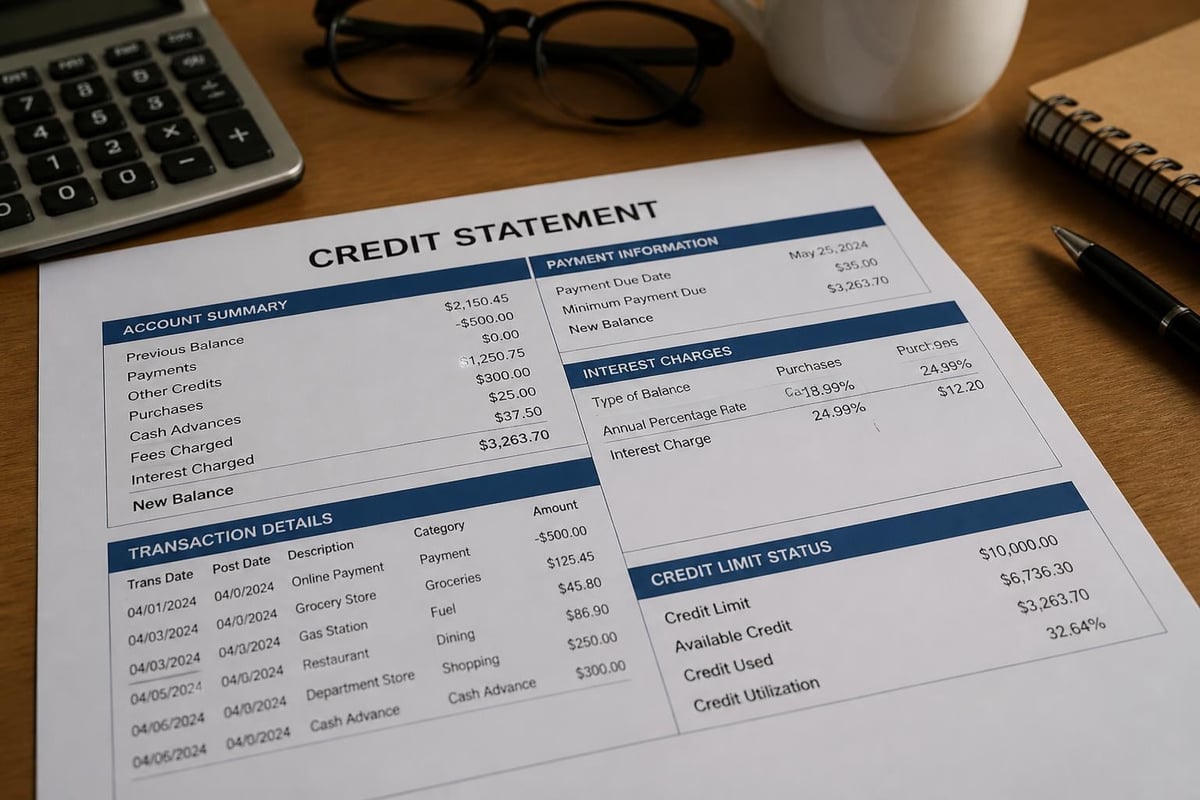
Every bank credit statement contains standardized elements that provide complete transparency about account activity. These components work together to give you a full picture of your credit usage and financial obligations.
Essential statement elements include:
- Account information and statement period dates
- Previous balance and current balance
- Payment due date and minimum payment amount
- Annual Percentage Rate (APR) and finance charges
- Itemized transaction list with dates and descriptions
- Available credit and credit limit
- Rewards or cashback earned (if applicable)
The transaction section typically lists each purchase chronologically, showing the date, merchant name, and amount charged. This detailed breakdown enables account holders to verify every charge and identify any unauthorized transactions quickly.
How Credit Statements Differ from Bank Statements
While both documents track financial activity, credit statements and traditional bank statements serve different purposes. A standard bank statement tracks deposits, withdrawals, and balances in checking or savings accounts, whereas a bank credit statement specifically monitors borrowed funds and repayment obligations.
| Feature | Bank Credit Statement | Traditional Bank Statement |
|---|---|---|
| Primary Purpose | Track credit usage and debt | Monitor cash flow and deposits |
| Balance Type | Amount owed (liability) | Available funds (asset) |
| Interest Calculation | Charged on outstanding balance | Earned on account balance |
| Payment Requirements | Minimum payment due monthly | No required payments |
| Credit Impact | Affects credit score significantly | Generally no credit impact |
Understanding this distinction helps businesses maintain accurate financial records across different account types.
Why Bank Credit Statements Matter for Business
Business owners and financial professionals rely on bank credit statements for numerous operational and strategic purposes. These documents provide the evidence needed for financial record-keeping and reconciliation, ensuring that all credit transactions align with internal accounting records.
Accounting and Bookkeeping Applications
Accurate bookkeeping depends on having complete transaction data from all financial sources. Bank credit statements provide the granular detail necessary for categorizing expenses, tracking vendor payments, and maintaining audit trails. Accountants use these statements to reconcile credit card accounts against general ledger entries, identifying discrepancies before they compound into larger problems.
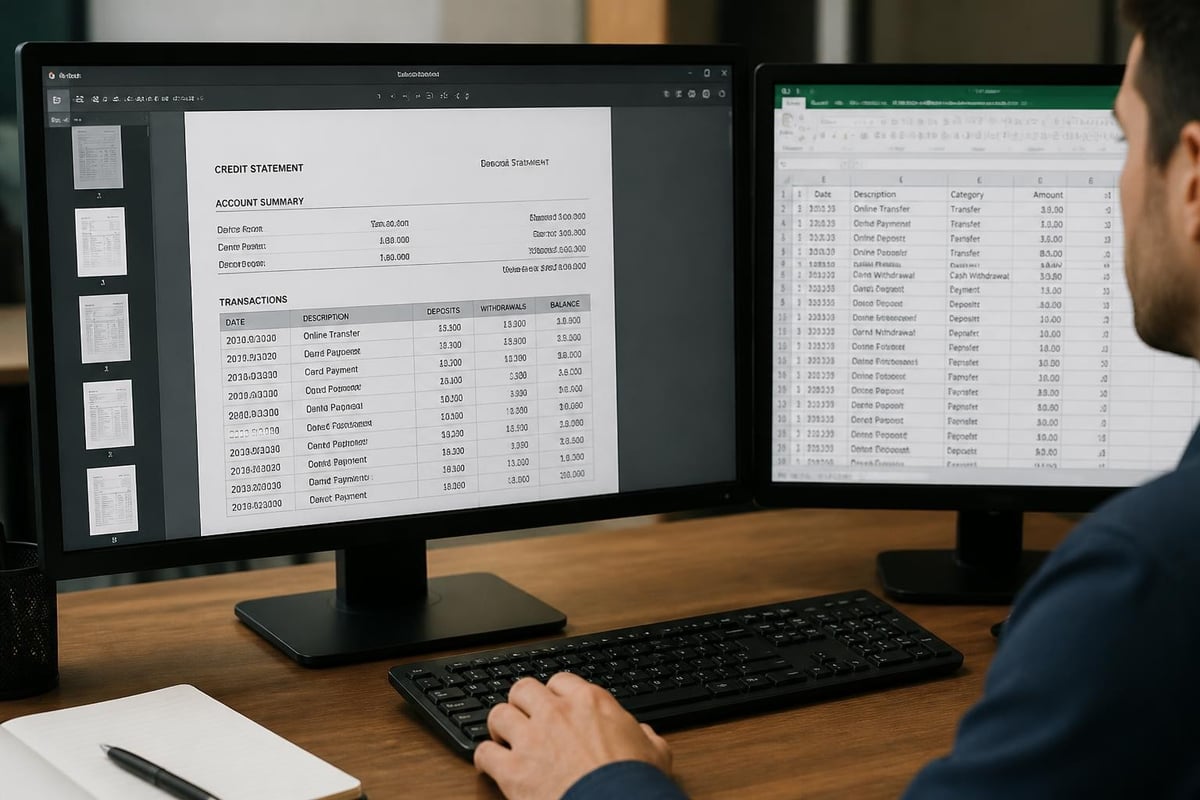
For businesses managing multiple credit accounts, the process of manually entering transaction data from PDF statements into accounting software can consume valuable time. Services that convert PDF bank statements to usable spreadsheets streamline this workflow significantly, reducing data entry errors and accelerating month-end close processes. When you need to convert PDF bank statements to spreadsheets, automation ensures consistent formatting that integrates seamlessly with platforms like QuickBooks and Xero.
Tax Preparation and Compliance
Tax season brings heightened scrutiny to business expenses, making bank credit statements invaluable documentation. The Internal Revenue Service requires substantiation for deductible expenses, and credit statements provide this proof with clear transaction dates, amounts, and merchant information.
Tax-related uses include:
- Identifying deductible business expenses
- Supporting depreciation claims for equipment purchases
- Documenting travel and entertainment expenses
- Verifying charitable contributions
- Providing evidence during audits
Maintaining organized credit statement records throughout the year simplifies tax preparation and reduces the risk of missing legitimate deductions. Understanding common uses of bank statements in legal and financial contexts reinforces their importance beyond basic bookkeeping.

Analyzing Transaction Data on Credit Statements
The transaction section of your bank credit statement contains insights that extend far beyond simple record-keeping. Proper analysis of this data reveals spending patterns, identifies cost-saving opportunities, and supports better financial decision-making.
Identifying Spending Patterns and Trends
Regular review of credit statement transactions helps businesses understand where money flows most heavily. By categorizing expenses from your statements, you can identify which departments or cost centers consume the most resources, evaluate whether spending aligns with budget allocations, and spot opportunities to negotiate better rates with frequently used vendors.
Monthly comparison of credit statements reveals seasonal patterns in business spending. Retailers might notice increased inventory purchases before peak seasons, while service businesses could identify fluctuations in operational expenses tied to project cycles.
Detecting Errors and Fraudulent Activity
One critical function of reviewing your bank credit statement is identifying unauthorized charges or billing errors. Monitoring account activity to detect unauthorized transactions protects your business from financial losses and prevents fraudulent charges from going unnoticed.
Red flags to watch for:
- Duplicate charges from the same merchant
- Unfamiliar merchant names or locations
- Charges that don't match purchase amounts
- Recurring subscriptions you've cancelled
- Round-number charges that seem unusual
Promptly disputing errors preserves your rights under the Fair Credit Billing Act, which typically requires notification within 60 days of the statement date. Maintaining detailed records from your statements supports these disputes with concrete evidence.
Leveraging Credit Statements for Financial Planning
Beyond their immediate accounting applications, bank credit statements serve as powerful tools for strategic financial planning and credit management. The data contained in these documents informs decisions about credit utilization, business expansion, and cash flow optimization.
Credit Score Optimization
Your credit utilization ratio, calculated by dividing your outstanding balance by your credit limit, significantly impacts your business credit score. Bank credit statements provide the information needed to monitor this ratio and keep it below the recommended 30% threshold. Research has shown that features derived from bank statements enhance credit scoring models, demonstrating the analytical value of statement data.
Consistently reviewing statement balances helps businesses time payments strategically. Making payments before the statement closing date reduces the reported balance, improving your utilization ratio even if you carry the same average monthly balance.
Cash Flow Management
Understanding when charges post to your account versus when payments are due enables better cash flow planning. The bank credit statement shows the statement closing date, payment due date, and grace period, allowing businesses to optimize when they make purchases and payments to maximize float.
| Cash Flow Strategy | How Credit Statements Help | Business Benefit |
|---|---|---|
| Payment Timing | Shows due dates and grace periods | Preserve working capital longer |
| Expense Planning | Reveals monthly spending patterns | Improve budget accuracy |
| Vendor Negotiation | Documents purchase volumes | Leverage for better terms |
| Seasonal Adjustment | Tracks historical spending cycles | Anticipate cash needs |
For businesses operating on tight margins, understanding these timing elements can mean the difference between smooth operations and cash crunches.
Converting Credit Statements for Digital Workflows
Modern businesses increasingly operate in digital environments where paper or PDF documents create workflow bottlenecks. Converting bank credit statements into structured data formats unlocks automation opportunities and improves data accessibility across your organization.
The Challenge of PDF Statements
Financial institutions typically deliver statements as PDF documents, which are designed for reading rather than data manipulation. While PDFs preserve formatting and provide a permanent record, they present challenges for businesses needing to extract transaction data for analysis or accounting purposes.
Manually copying transaction data from PDF statements into spreadsheets or accounting software introduces several problems:
- High risk of transcription errors
- Significant time investment for high-volume accounts
- Difficulty aggregating data across multiple statements
- Limited ability to perform advanced analysis
These limitations create inefficiencies that compound as businesses scale and manage more credit accounts.
Benefits of Structured Data Formats
Converting your bank credit statement into a spreadsheet or CSV file transforms static information into actionable data. Structured formats enable sorting, filtering, and pivot table analysis that reveal insights invisible in PDF format. When dealing with PDF bank statements, conversion to spreadsheet format dramatically accelerates financial workflows.
Advantages of spreadsheet conversion:
- Direct import into accounting platforms: Eliminate manual data entry by importing formatted transaction files
- Custom categorization: Apply business-specific expense categories across all transactions
- Multi-statement analysis: Combine data from multiple periods or accounts for trend analysis
- Automated reconciliation: Match transactions against purchase orders or invoices programmatically
- Enhanced reporting: Create custom dashboards and visualizations from transaction data
Security Considerations for Credit Statement Data
Bank credit statements contain sensitive financial information that requires careful protection. Understanding security best practices ensures that your statement data remains confidential while still being accessible to authorized users who need it for legitimate business purposes.
Data Protection Standards
When handling credit statement data, businesses should implement controls comparable to those used by financial institutions themselves. This includes encryption for data at rest and in transit, access controls that limit who can view sensitive information, and audit trails that track when statements are accessed or modified.
For businesses using digital tools to process statements, verifying that service providers maintain bank-level security for data handling protects against data breaches. Look for services that employ encryption, secure data centers, and compliance with financial industry security standards.
Retention and Disposal Policies
Establishing clear policies for how long to retain bank credit statements and how to dispose of them securely prevents both compliance issues and security risks. Most businesses should retain statements for at least seven years to cover IRS audit periods and potential legal requirements.
Recommended retention periods:
- Active accounts: Retain all statements for current and previous seven tax years
- Closed accounts: Retain final statement plus seven years of prior statements
- Tax-related purchases: Retain until asset is sold or depreciation period expires
- Legal matters: Retain indefinitely if related to litigation or disputes
When disposing of old statements, use cross-cut shredding for paper documents and secure data wiping for digital files. Simply deleting files or recycling paper statements leaves data vulnerable to recovery by unauthorized parties.
Advanced Uses of Credit Statement Data
Sophisticated businesses extract additional value from bank credit statements beyond basic accounting and compliance. The transaction data contained in these statements supports advanced analytics, financial modeling, and strategic planning initiatives.
Predictive Financial Analysis
Historical credit statement data enables forecasting of future expenses and cash requirements. By analyzing patterns across multiple statement periods, businesses can build models that predict seasonal fluctuations, identify growth trends, and estimate the financial impact of business decisions. Research into bank credit rating through visual analytics demonstrates how statement data informs sophisticated financial assessments.
Machine learning algorithms can process years of credit statement transactions to identify anomalies that human reviewers might miss. These systems learn normal spending patterns and flag unusual transactions for review, providing an additional layer of fraud protection beyond manual statement review.
Vendor Relationship Management
Aggregating credit statement data by vendor reveals your organization's total spend with each supplier. This information strengthens negotiating positions when discussing volume discounts, payment terms, or service level agreements. Understanding the full scope of your business relationship, documented through credit statements, often uncovers consolidation opportunities that reduce costs.
For businesses using bank statement formats across different financial institutions, standardizing data extraction processes ensures consistent vendor analysis regardless of statement source. This consistency supports accurate spend analytics and informed procurement decisions.
Integration with Business Systems
Maximum value from bank credit statements emerges when statement data flows seamlessly into the broader business technology ecosystem. Modern businesses use integrated systems where financial data connects to inventory management, customer relationship management, and business intelligence platforms.
Accounting Platform Integration
Leading accounting platforms accept imported transaction data from credit statements, but format requirements vary. QuickBooks, Xero, FreshBooks, and other systems each specify particular data structures for imports. Converting statements to match these specifications prevents import errors and ensures transactions map correctly to chart of accounts categories.
Automated statement processing eliminates the lag time between receiving statements and having current financial data in your accounting system. When you can process bank statements to Excel format immediately upon receipt, you maintain real-time financial visibility rather than waiting for manual data entry completion.
Dashboard and Reporting Systems
Business intelligence tools aggregate data from multiple sources to provide comprehensive operational insights. Incorporating credit statement data into these dashboards alongside revenue, inventory, and customer data creates a complete picture of business performance. Executive dashboards might display credit utilization trends, expense categories as percentages of revenue, or comparisons between budgeted and actual spending.
The frequency of statement data updates affects reporting timeliness. Businesses that process statements immediately upon receipt maintain current dashboards, while those relying on manual processing often work with outdated information. This timing difference can impact decision-making quality, particularly in fast-moving business environments.
Statement Format Variations Across Institutions
Not all bank credit statements follow identical formats, even though they contain similar information. Different financial institutions organize transaction data, present balance information, and calculate interest charges in varied ways. Understanding these variations helps ensure accurate data interpretation and processing.
Major Format Differences
Some institutions list transactions chronologically by posting date, while others group them by transaction type. Statement layouts may place summary information at the beginning or end of the document. Interest calculation methods and their presentation differ based on account type and card issuer policies. For those working with checking statements alongside credit statements, recognizing format distinctions prevents confusion during reconciliation.
Common format variations include:
- Transaction date vs. posting date: Some statements show when purchases occurred; others show when charges posted
- Pending transaction treatment: Varying approaches to displaying authorized but unposted charges
- Fee itemization: Different levels of detail for service charges and penalty fees
- Rewards presentation: Diverse methods for showing cashback, points, or travel rewards
- International transaction formatting: Varied approaches to currency conversion and foreign transaction fees
These variations complicate automated processing unless your conversion tools can handle multiple statement formats flexibly.
Standardization Strategies
Businesses managing credit accounts from multiple institutions benefit from standardizing how they process different statement formats. Creating a consistent output format regardless of source simplifies downstream analysis and reporting. When all statements convert to the same spreadsheet structure with identical column headers and date formats, aggregating data across accounts becomes straightforward.
Template-based conversion approaches map each institution's unique format to your standardized structure. This mapping ensures that "transaction date" from one bank and "posting date" from another both populate the same field in your final dataset, maintaining consistency across sources.
Mastering the complexities of bank credit statements empowers businesses to maintain accurate records, optimize financial performance, and make data-driven decisions. Whether you're reconciling accounts, preparing taxes, or analyzing spending patterns, understanding these essential documents forms the foundation of sound financial management. Bank Statement Boss transforms cumbersome PDF statements into organized spreadsheets with 99% accuracy, integrating seamlessly with your accounting platforms while maintaining bank-level security, so you can focus on insights rather than data entry.